


Why Supply Chain Compliance is Failing with Dr. Tedd George
Watch the episode
Summary
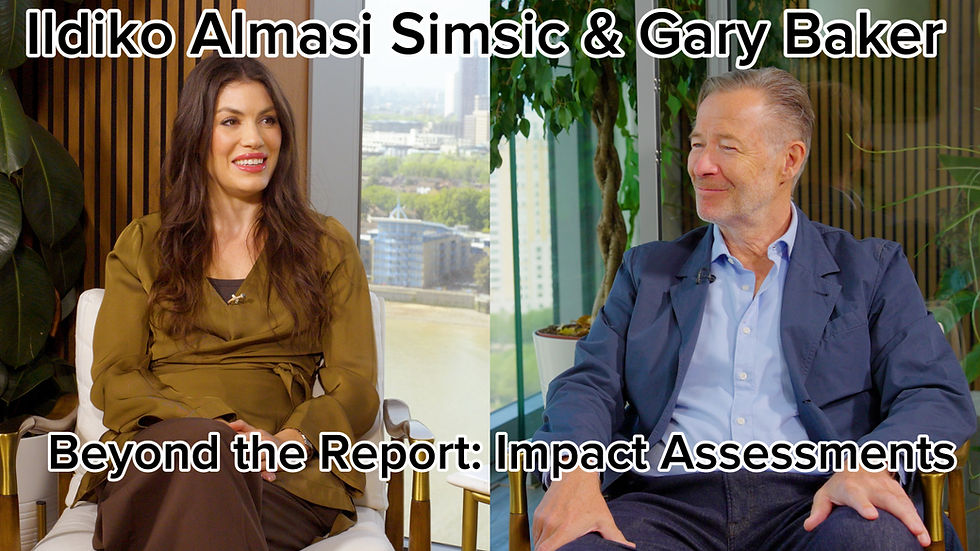
In this episode of The No Nonsense Sustainability Podcast, host Ildiko Almasi Simsic welcomes Dr. Tedd George, a leading expert in African markets and ESG, to discuss the challenges facing global supply chain compliance. Dr. George, founder of Kleos Advisory Ltd, brings his expertise to shed light on the complexities of commodity trading and the pitfalls of current compliance practices.
The conversation delves into the shortcomings of desktop compliance, the intricacies of mass balance in cocoa trading, and the implications of shifting from voluntary certifications to binding legal regulations. Dr. George highlights the dangers of blanket bans on commodities and countries, and the importance of understanding the nuances of supply chain management.
Key insights from the discussion include the need for transparency and fairness in supply chains, the role of technology in improving traceability, and the economic incentives required to drive sustainable practices. Dr. George emphasizes that addressing poverty is crucial to achieving genuine sustainability in global supply chains.
Highlights
Dr. Tedd George discusses the pitfalls of desktop compliance in supply chains.
Mass balance in cocoa trading reveals transparency gaps and consumer misconceptions.
The shift from voluntary certifications to hard law impacts businesses significantly.
Blanket bans on commodities or countries can be counterproductive and misguided.
Technology plays a crucial role in enhancing supply chain traceability.
Economic incentives are key to promoting sustainable practices among farmers.
Understanding the difference between child work and child labor is vital.
Key takeaways
1. Desktop compliance often fails to address the real issues faced by farmers and buyers.
2. Mass balance in cocoa trading can mislead consumers about product sustainability.
3. Voluntary certifications are becoming mandatory, affecting business operations.
4. Blanket bans ignore the complexities of regional production and management.
5. Technology can enhance transparency and accountability in supply chains.
6. Economic incentives are essential for encouraging sustainable farming practices.
Timestamped breakdown
[0:01] — Introduction to the Podcast: Host Ildiko Almasi Simsic introduces the podcast and its focus on real sustainability issues.
[0:42] — Guest Introduction: Dr. Tedd George is introduced as an expert in African markets and ESG.
[1:24] — Understanding Supply Chain Integrity: Dr. George explains the concept of supply chain integrity and its importance.
[2:47] — Risks of Desktop Compliance: Discussion on the limitations of desktop-based due diligence in supply chains.
[5:13] — Mass Balance in Cocoa Trading: Exploration of the mass balance concept and its implications for consumers.
[8:19] — The Role of Certifications: Challenges with multiple sustainability labels and their impact on farmers.
[11:47] — Voluntary Certifications to Hard Law: The transition from voluntary green certifications to binding legal regulations.
[17:24] — Child Work vs. Child Labor: Clarification of the difference between child work and child labor.
[20:32] — Financing and Farmer Support: Discussion on the importance of financing and support for farmers.
[27:29] — Future of Supply Chains: Predictions on how supply chains will evolve with technology and regulation.
Edited transcript
Hi everyone, welcome to the non nonsense sustainability podcast. I'm Ildiko Almasi Simsic. This show isn't about saving the world with corporate slogans or glossy brochures. Let's leave the PR spin at the door here. We're talking about real projects, real infrastructure, and the future we're building together with the people shaping that future and the people criticizing it. No fluff, just real talk. Joining me today is Dr. Tedd George, the founder and chief narrative officer of Kleos Advisory Ltd. He's a thought leader, experienced speaker, trainer, podcaster talking about trade finance, agribusiness, fintech, and all things ESG. Welcome to the show, Tedd.
Thanks. Really good to be here and a gorgeous day for it as well.
Yes, as you know, we have both the buzzer and we're tackling one buzz word at a time. Okay. Today we will be talking about supply chains and commodities specifically trading agribusiness related commodities. So I thought that you could take 60 seconds to explain what supply chain integrity is. Are you ready?
Okay, let's go. So supply chain integrity is about having a global supply chain which is transparent, which is fair and which treats everyone who is in the supply chain fairly as well and treats them justly. So, we're talking about everyone in the supply chain. Number one, we're talking about the environment, the impacts you can have, destruction of environment, living well with it, but the people, the people who produce the goods, it might be cocoa or coffee, the people who transform the goods, who transport them, and of course the consumers at the end of it as well. But also integrity, it's a bit like with human beings when you have integrity as well. It's several things that all come together. It's not just about having a certificate. It's not just about saying it is our intention to do something. It's about demonstrating that. And therefore, you have to have all the different pieces. So, are children going to be working in the supply chain? You show that it's under the correct conditions. Are there environmental impacts? You understand them. You try to mitigate the impacts. You try to reduce them so they're not so bad. And then they all come together and you integrate them into the supply chain. That's where we get integrity.
Fantastic. There's a lot to unpack there. The reason I invited you because we worked together on guidance node specifically for trade finance and certain commodities and we came to the point where the lenders and the client was interested in flagging country risks and us working professionals on the field we understand the nuances. So what do you see as the biggest risk with these desktop-based due diligence on supply chains that automatically flags commodities based on the countries of origin?
Absolutely. I think basically it's a shortcut to doing nothing. The big problem we have with a lot of banks is they like business as usual. That's why they lend billions and billions to the big trading houses because there's no real risk. You lend to Trafigura, Cargill, Barry Callebaut, you're going to get your money back. As soon as you're talking about an SME, one of these smaller enterprises, you don't know enough about it. But also with country risk, so much of that reflects ignorance, you know. All it takes, I mean, I actually saw an American company who didn't want to do a deal in Senegal because there'd been a bomb in Somalia. It's like that's the other side of the continent. That's a little ignorant, right?
It's hugely ignorant. So there's ignorance, there's prejudice in there as well. But the thing is, I think the truth is there's some hard work in there, right? If you want to make more business, you can't turn up like suitcase banker in the old days. You need to do work. You know, you need to find the partners and you need to get transparency. You really need to understand what's happening out there. So you need to understand about the business. So actually I think that's one of the biggest for me I think it's one of the laziest shortcuts when they say red flag on a country. That's ridiculous. If you look at the nuances of a particular commodity, it might be that it's being produced by a very well-known international company which has got very good guidelines, good traceability. Therefore, yes, fine. The country might actually be in conflict in the north, but it's not in the south. So you judge your risk by that one. But blanket saying no, we can't do certain business in certain countries is not acceptable. The only exception would be if there's a sanction regime, of course you can't do business. But I could name at least a dozen African countries where they are constantly they just say nope, we're not touching them simply because they have a lack of imagination and frankly I think they're being a bit lazy.
And also lack of expertise because if you look at who manages the supply chain, like who are the experts making these decisions? They're not the ENS experts. They're not people like you and me. They never get to us. They're the ESG experts who go by the desktop due diligence, go by the CH GPT due diligence and not the people who have actually traveled to these countries. How do you see the expertise of supply chain management changing over the past 5 years in this big corporation?
Well, I think it's important to distinguish what we're talking about different corporations because if you talk about the big trading houses, the supply chain managers, so the Cargills, the Vitals, Trafiguras, etc. They have exceptional supply chain management. They aren't horizontal structures and so the information flows perfectly within them. The problem is it doesn't flow out of them. Right? It's very hard as you probably know yourself as you know when you try and do podcasts. No one from the big companies wants to tell you anything. But the moment you join one of those companies, even as a junior, you're told if you see something that you think is going to affect the supply chain, you can ring the CEO the same day and tell him. There's a free flow of information.
Is that true though?
Yeah. I mean, it's amazingly. So if you look at something like Cargill if I think of I mean particularly Barry Callebaut recently we went to see them I was astounded by their level of understanding about the supply chain but that is because they control it. I mean it is an enclave supply chain and you have everything else outside it. That's where the real problems arise. So I think really that's where there is so much strength that comes from you know having those kind of organizations. But the big problem is if you're a bank and you have to judge ESG you actually have to know the business very well. I've often thought this is one of the big challenges of being a trade financier. You not only need to know banking, you need to know the entire supply chain. You need to understand them as well. They'll be throwing out terms like mass balancing and you'll be like you know what is that?
What is mass balancing?
Well, mass balancing the interesting one that is the dirty secret of the chocolate industry. And it's something which is you could say was justified but at the same time me as a consumer makes me feel very uncomfortable. So it was back in 2012 they had the global cocoa conference and I was attending for Ecobank as a junior analyst. There was a big panel of all these leading cocoa companies and they were talking at various points about mass balancing and I asked the person next to me do you know what that is? And he's like so I thought perfect time for a stupid question. So I said excuse me you've been talking about what mass balancing what is it? And they kind of laughed it off like what a stupid question. I said sorry can I just ask everyone in this room does anyone know what mass balancing is? No one. So the guys like ah so what that's balancing is is it's very hard to separate within supply chain sustainable production from let's say non-certified or unsustainable production. There are some companies that do it but it's very expensive. You go to a warehouse you got that lot there the other there right. So what a lot of companies do is they say look it's impossible for us to actually specifically trace the sustainable production through the supply chain but we know for example that we have bought half a million tons of sustainable cocoa. We have the certificates to prove it. that is somewhere in the supply chain. Therefore, we're going to brand 50% of our products sustainably. Where do you think people care about sustainability? Europe, North America. So that means if you buy your chocolate bar here in the UK and it says fair trade on it, it may have actually unsustainable cocoa in there, but you've paid for sustainable cocoa somewhere in the supply chain.
Okay, that that honesty is refreshing, but it's also kind of tricky, right?
Hugely so. I mean, I think it's hugely dishonest, but there's a very good reason for it. Okay, it's insanely expensive to separate the supply chains out and there's no actual need for it as well. If the need is that you want to make sure there's sustainable production, does it really matter? The view of the big companies is we're going to go to 100% sustainable eventually anyway. So, what's the point of separating them out as well? But, for example, if you get your dairy milk bar, if you just peel over the back of it, it's hidden under there. It says mass balanced cocoa.
Doesn't mention what it is.
I never knew what it meant.
Yeah, as a consumer, I felt like shocked when I first heard it, but so I'm on the fence on this one. I don't know. I think it is dishonest, but I can understand why they do it. But I'm saying that's why it's a bit of a dirty secret because I guess it's better to include those producers, right? To over time help them improve their production and achieve like a higher degree of sustainability in that, right?
Oh, completely. And this is the great thing. I mean, certainly my experience of a few years ago, I was working on a project for fair trade. We visited a whole series of producer organizations north of Abidjan and in the main cocoa region there. And when I was seeing Cargill supply chain, it was remarkable. You could really see first of all the wealth of the farmers. I mean, the houses did look a bit dilapidated, but then you'd see they've all got satellite dishes. They've all got air conditionings, fridges, the guy's got a motorbike, the kids, you know, there's lights and all that sort of stuff. They're well-dressed. And then I'd be driving back into Abidjan and see the abject poverty on the edges of the city and you think those farmers are doing fine and they were certified and basically they're getting a good return for you know, and they're sustainable production. So, absolutely it can have an impact. The problem is probably 30% of production is sustainable, maybe 40%. So all that other part of it is where the real problems in the supply chain are.
And when you say production is sustainable, is it certified or is it actual practices that are different? When you were talking to these like small holders specifically, what were the biggest hurdles for them to become that certified sustainable smallholder?
Well, and we got the problem where there's there's way too many different sustainability labels. So you're trying to multiply certify in different points. But I think the bottom line that I see everything is that it's all about income. Okay. The root cause of all unsustainable activity is poverty. If a farmer is not able to get the imports or whatever so they increase yields on the farm, they're going to chop down more forest. If the nearest school is 20 miles away, they're not going to send their kid there. So the whole point is if you can actually have a clear economic incentive for the farmer to be sustainable, they will do it. And that means number one, you get a premium for the cocoa, right? which is higher than let's say bush cocoa as they call it or field cocoa. But secondly, you know that in the future you're going to be able to sell because in they might say 5 years from now we're not buying anything that isn't sustainable. The big difficulty here is that if you take a company like fair trade who are excellent what they do in sustainability but they say very clearly we are not a commercial company. So we don't organize contracts for example. But therefore that means you get cooperatives they do all the work to be certified. They produce certified beans. They go to the market and there's no one who wants certified beans and they have to sell them as normal beans. So they don't get the premium, right?
Okay.
And that's because they don't have an offtaker contract. And the simple point is if you're going to produce anything specialist, right? You sell first then you produce. You don't produce and then look for a buyer. Now fair trade have often said, well that's not our problem, but therefore I feel that's dishonest, right? You've made them go through all this work and they can't get the premium. This has happened in coffee as well quite a bit. So for me it's about you've got to get the economic incentives aligned. And in terms of sustainable production, we're talking about not cutting down forest, using not using too many pesticides, good husbandry, good practices which increase the yield so you don't need to take more land, things like that.
Yeah. And I feel like a lot of these voluntary certifications or that used to be voluntary, there's over 400, right?
Yeah.
It's a huge number. How do we even navigate this as consumers? How do we know that it's a valid real certification? And how do we know what it actually means?
Well, unfortunately, we don't. And I think you made the real point there. You know, you can buy your cocoa bar, your chocolate bar. It says, let's say fair trade rainforest alliance. It's pretty straightforward what that is. Maybe you know, a cocoa life. There's numbers of other ones as well, but it's hugely confusing. They're all kind of similar, but they're different in other ways as well. Some have a stronger social focus. Some are more focused on the environment, such as Rainforest Alliance. But that doesn't mean it's not social. Now you can look it up online but I think it comes down to can they prove what they're doing. So I think the whole point here is we need to have alignment and there are a couple of approaches out there. One is in Africa they've actually developed their own sustainability standard for cocoa. It's called ARS1000. No one's heard of it outside Africa but the great thing is it was designed by the Africans that you know it is Africa appropriate. So it absolutely aligns with the sustainability standards internationally, but it's appropriate to African markets on issues such as child work and and other things like that as well, you know. But the other thing is actually the now the biggest chocolate companies are getting together. They've created a foundation called Together Cocoa. That's Mars, Hershey, Mondelēz, Lindt, and Nestlé. And essentially they're going to see if they can align because there's way too much duplication. You might have a cocoa farmer and he's doing four different certifications. So they're running a program to see first of all they're going to run some programs together and some separately. They're going to compare how they were. But I think getting rid of duplication is one of the biggest things and why shouldn't there be a single standard for cocoa that everyone understands? I mean we have health and safety on an oil rig or in a mine or in a manufacturing plant, right? Why can't there be one for cocoa? So I think that's really really important and I think you're right. As a consumer we're completely confused.
Yeah. Yeah. And they often become meaningless. Like you don't know why they purchase the sticker, but you don't really know what's behind it, right? Because a lot of these organizations, they don't certify with in-person audits. They just resort to the desk of due diligence. And as we know, it doesn't always represent their reality. So based on your expertise, what's a pragmatic and good methodology where you still get on-site expertise or visits, but you kind of balance it. So it makes financial sense to do that.
Absolutely. Well, the financial part comes from the ability to see what's going on. So I'd say the key thing is making the farmers visible in the supply chain. Okay. The thing about these big trading houses, and a lot of people criticize them, but actually everyone who works for them is very well treated. They provide financing, training, all kinds of things to everyone in the supply chain. But if they're buying from an aggregate and here's 50,000 tons, they have no idea who the farmers are. How are they going to help them in that sense? So the farmer has to be visible. So I'll give you one example and this this actually runs for many different cocoa companies. If you're a farmer who's part of a cooperative which is part of, you know, a certification label or let's say is going to be certified. You will be registered. They'll get all your details. They get your thumbprint. They know who your kids are, where you live. They do a polygon of your farm. Okay? your mobile and present your cocoa in a field warehouse in the middle of nowhere. You turn up, you do your fingerprint check, no need for paperwork, you cocoa, they put a little label on there and they scan it, the information is in there. That's then taken to a main aggregation point and it's mixed in with other cocoa and goes through the supply chain. So it means for the trading house, they know who the farmer is, they know how often they supply cocoa, they know the quality. So they can immediately look and say, "Look at this farmer. He's got yields which are half as good as everyone else. What is he doing the others aren't? Maybe we can improve it. Also, they could say this farmer's got yields four times higher than everyone else. He's mixing beans. He's getting beans from other people uncertified and saying these are my beans. But also, if you have satellite data and and you know there's companies like Satelligence, for example, do this. You can basically mix satellite data with liar and also with the polygon maps and also with drones and you can have a real-time picture of what's going on. And I saw a great example of this in Uganda where basically they saw that there were two farmers who' encroached about 100 yards of their farms into protected forest and it immediately came up as an alert. So they told the local village chief about it. The chief goes down with everyone to the farmers and says look you've done this. They're like sorry they pull back. Right. Because you're using local enforcement if you like and everyone wants to be there in the community. the problem before a bit like the red flag you mentioned earlier is where you say there's been deforestation here therefore we're banning all cocoa production.
Yeah because that is what's coming with the EU deforestation regulation right a lot of these voluntary stickers are now legislation yes so what will that mean for a small holder like that?
Well I think the key thing is that you know in the future we're gonna have to see they keep delaying EUDR but it's definitely coming in at the end of this year for most companies and by the middle of next year for pretty much all of them um the devil is in the detail Because first of all, we've got to say what was forested land, where is the cut off point. I think they're talking around 2020. They're saying anything that was forested land at that point still counts as it. But a lot has been deforested since then as well. And you have entire communities who live around that as well. So that's a difficult one to balance. But I think the key thing is going to be it's it's got to be we take stock of where we are now and we say from now on this is how it's going to be. Um there has to be traceability. It's got to be traceability of the cocoa from the moment it is given to the very first trader through through the system. You need all of the farmers and cooperatives registered. But if you do that, you can then ensure that they get training, they get infrastructure, and they get paid the premium. If they do that, it's just a virtuous circle which continues. But if you have all of these individuals and and including sometimes illegal immigrants coming in, let's say to the um where is their interest in in basically being sustainable? Not at all.
Yeah. And that leads us to the human rights and the labor aspects of this because one of the biggest risks in supply chains relate to labor and human rights abuses specifically the myth that child work equals child labor.
Yeah.
What is the difference between child work and child labor?
Yeah. Well, this is critically important because I think there's something like 1.3 million children in Africa who work in cocoa. And the trouble is that you can see there are certain consumers and let's say sometimes governments who say we will not accept any produce that is produced with with with children working on it. That's what the IFIs are doing. Well, if you do that, you're basically not going to get anything at all because children involved in all of this production. The question comes down to the difference between child labor and child work is child work is appropriate work. Child labor is abusive. So it comes down really to three things. The first thing is is the child the child of the farmer? Right. Okay. Well, and that includes natural children. In other words, born out of wedlock. Fine. In other words, is their child, right? It's not a children who've been trafficked in. This was an issue that came up a few years ago. Children trafficked in from Burkina Faso and Mali and Guinea, right? That's a no no. Number two, are they doing appropriate work? So, in other words, below a certain age, they shouldn't be using machetes. They shouldn't be using pesticides. They shouldn't be using heavy machinery, things like that. So, what would be an appropriate work? Well, it varies from cooperative to cooperative, but very often if you go to co-ops nowadays, the cooperatives of cocoa, they'll have paintings outside and it says below the age of 16, no. Below the age of 18, no. Great. So, it's very clearly defined what you can do. But the third and most important, are they going to school? Right. Yes. Now, the reality is if you're the child of a farmer anywhere in the world, you're going to be working on the farm, right? That's cool. In the UK as well. But every farmer wants their kid to go to school. that that trip I did when we went up to Agboville in the area around. We left very early in the morning to avoid traffic and we were driving along these roads through the cocoa plantations. It's probably about 6:30 in the morning and there were hundreds of children going on the sides of the roads in school uniform going to school, right? The farmers want their kids to go to school, but if the nearest school is 20 miles away, it's not going to happen. Yeah. And this again, if you've got very good data, you can say, "Hold on, we know there's 6,000 children here and there's no school. We need to put a school right in here." It's things like that. But if those three conditions are met then the children do need I mean you know they need to work on the farm to support the farmer obviously outside school hours etc appropriate work but also we need more young people going into cocoa the average age of a farmer is 55 and that's an average okay right so you can imagine a in cocoa yes in west Africa 55 so and you can understand why because the kids are like they look at their dad he's back breaking work he can't make any money I'm not going to do this I'm going to try my luck in the What we need to be able to show them is no hold on if you are you know you're with a good certification label but you build an agribusiness where it's not just cocoa you might have some palm and some maize and some coffee or whatever like that they're like hold on I could run an agribusiness that's actually quite interesting but we need that because if we don't have the young going in there will be no farmers in 20 years.
And how is the financing coming to for that is it through private sector investments is it from like IFIs is it local governments?
Well I think the thing is like farmers are amazing entrepreneurs if you think about it every time they plant a crop that they're making a bet right on whether the crop's going to grow and whether they can sell it as well. So really more than anything it's enabling them to do that. So financing working capital is the key thing they need. So money to actually buy the crop, money for things like pesticides inputs also like the big difficulty in cocoa for example is what they call the months of hunger which usually run from let's say let's say June until the end of September. You've had the main crop, you have the light crop which is much smaller. A lot of farmers don't want to sell that because it's at a lower price. They want to wait for the price to go up on the 1st of October, which it usually does. There's no money. But the beginning of September, you got to pay school fees. So, one of the big things is about can you understand the cycle of the farmer and say, "We're going to give you that money, lend it to you at a very favorable rate at this point. Therefore, and then when you start selling your cocoa, you pay off most of it." So, that's one of the biggest things is actually getting the money to the farmers because when it comes to being entrepreneurial, they're extraordinarily entrepreneurial. That's the key thing, financing more than anything. And actually, this project I've been working on as part of a big team for the International Cocoa Organization is to create an Africa Cocoa Exchange. And that could be the solution because farmers could take their beans, let's say in June, deposit them in the exchange, get a warehouse receipt and get 50% financing on the back of that. For the bank, it's zero risk. If there's a default, they just sell the beans, they get the cash. I mean, they have control over the beans as well. that could be one of the perfect solutions but I would say financing is the key and the other thing is everything about capacity building like how to do their finances how to actually present three years of you know record showing I sold this and I did that so a bank would say okay we'll lend you some money.
Yeah no that's that's very interesting so when we're thinking about agribusiness in Africa we have certain myths right we think that we can trace it back to the farmer is that true or is that just a myth I mean, it's a myth in the sense it depends what you mean by tracing back. I think as a consumer, I would love it if I could get a chocolate bar and there's a barcode and I go like this and look, here's the farmer who made it. You can see them on their farm and oh, I feel so good about that, right? Some companies kind of do that. Indeed, but on a very small scale. So, if you're only producing, I don't know, like, you know, five tons of chocolate a year or something, you could probably do that, right? No, what you got to understand is traceability is to get as far back as you can. So the example I gave for example would be one cooperative all their farmers give the beans to a certain field warehouse that goes into a certain lot of cocoa and that lot of cocoa makes its way through the supply chain right up until it's actually turned into chocolate. So you can say this chocolate has cocoa which came from this lot in Côte d'Ivoire and this lot is made up of 17 farmers these 17 farmers from this cooperative that is traceability in that sense. So I think that's probably as good as it can get. If you want anything more specific, it's just extremely expensive to do. And you could argue is it really needed, right? Because the, you know, to trace a bean to a farmer, that's something which is kind of, if you like, emotionally nice. It's much better if you can say, I know that farmer and all of them that they work with are are integrated members of the supply chain. They're valued. They're getting, you know, they're getting properly paid. And look, I can read this report and see that these many, you know, these many kids have gone to school and this is what they've invested in local. That is what we want to achieve. But I think that that kind of thing of really wanting to know that the bean getting back right to the bean, you probably have to go to the farm to do that.
And is it better to purchase from like a bigger cooperative or a bigger company just because they have nicer reports and they can present their sustainability efforts better or is it better to go for the smaller ones?
Well, it's an interesting one. It depends how you like your chocolate, you know, because like I mean the the the stuff which is is much smaller production has is very kind of specialist. It's more expensive, but I still think it's delicious. But at the same time, you know, I like my dairy milk as well, right? And I know I know some people in Switzerland would be horrified. They're like, "What awful chocolate." Yeah, but I don't really like Swiss chocolate. You know, everyone likes their own chocolate. Americans like Hershey's. I mean, I want to touch that, you know. So, I think basically that you want to if you are a discernable consumer, just take a little bit of time, okay? Find out about it. I personally am very happy with Fair Trade, Rainforest Alliance, Cocoa Life because I've seen the supply chain myself for those ones as well. Not perfect, but infinitely better than some of the other abuses which are occurring outside this visible supply chain. And if it's one that you don't know very well, do a little bit of you know investigation and look out for this key thing. It's not greenwashing, it's greenishing. Exactly. In other words, oh yes, it's our intention to be you know we support the farmers in multiple ways. what we're committed to doing this. We're committed to it is our pledge by 2050 and you think by 2050 you're going to be retired on your yacht. You're not going to be held accountable for this one, you know. So, yeah, I think that that's really important. You want to, you know, any any kind of vague commitments, things which aren't specific in that sense. And then make your choice because actually it's only consumers who are going to move this one. We've seen that happening in in the cocoa market recently. the the the fact with with chocolate that actually when they were forced eventually to put up prices they had to the chocolate manufacturers they saw there was a massive drop in chocolate and we've also seen a huge rise over the let's say 10 15 years particularly in Western Europe for people specifically wanting sustainable brands so you do have the power to move the needle ultimately it comes down to the consumer.
Okay and the same way we're not red flagging countries we cannot red flag produce right no but if you had to dispel a myth about one of these agricultural products, would it be cocoa, coffee or something else from Africa that is like wildly misunderstood? Well, I think one is palm oil. I mean, palm oil is a really big one. There's no question that if you look at the largest producers, Indonesia and Malaysia, there has been terrible deforestation going on there. And in fact, there are, you know, we're down to like 50 Orangutans in some parts of those countries, the only place they are in the world because their livelihoods are being taken. So it's all about can you have sustainable palm oil production because actually the oil palm it's actually native to West Africa. So if you have some oil palms on your plantation but you also have some cocoa and coffee you can mix that together. The problem is deforestation but also the monoculture where you just have you know miles and miles of palm oil. Now they're beautiful. Those plantations I've walked through them it's like cathedrals of palm but you look around you're like where is the biodiversity? That's terrible. So it's got to be mixed. So therefore when it comes to palm oil I just say there is a supposition among some people that all of it is unsustainable. No that's not true but there's a big risk associated with it. And this is another way for example I think Satelligence is brilliant. One of the things that they do in Indonesia for one of the companies there is they do a mapping of where is deforestation going on and a mapping of where the main oil mills are. So if your oil mill is very close to an area of deforestation, you know you're probably causing it, right? Whereas if you're in another area you're like hold on there's no deforestation gone here. that's where the sustainable model is. So there's ways of doing that as well. But I would say there's a good reason there's a red flag for palm oil, but that doesn't mean it can't be produced sustainably.
Okay. And looking into the future based on these past maybe five, seven years of increased interest in human rights and environmental impacts down the supply chain. Where do you think the supply chain industry is going? Where where do you think it will be in five years time? Well, I think basically it is getting more integrated and I think the great thing is seeing the use of technology is just extraordinary particularly for traceability. So one of the things I said is making the farmer visible but also everyone in the supply chain. So the transporters, the aggregators, the processors, the people who store stuff, the people who run the boats, everything. So making sure that you know they're not people who like on zero hour contracts, Uber drivers. Again, seeing that everyone is fairly fairly done that on as well. But the other thing is how can you trace very high level supply with integrity there with technology with technology the technology. Well this is the thing is what's interesting a lot of it comes down to the actual value per weight. If you take something like cocoa it's worth probably 20 times by weight that wheat is but then if you get take a step up and you say something like a diamond it's like a thousand times. So there's a company called Everledger and this is one of the good uses of blockchain there is. Essentially they if a diamond is produced they basically put it through a spectrometer. They get the exact precise details about it and they put that information into the blockchain and they issue a token. Now that then diamond goes through the supply chain let's say it ends up in Antwerp. A dealer's looking at it. They check the blockchain. They put through the spectrograph. That's the same diamond. Okay. So that's why you absolutely know that's not a blood diamond in that sense. But it goes further. There's a company called Dory. They also do tracking of things like cobalt. They do the same thing. They basically do you know an analysis of the cobalt all put that with a token exactly the same analysis the other end they even do it with leather. What do you think they use for leather?
I have no idea.
DNA they take the DNA of the leather cuz remember if it's a sustainable handbag for Gucci in Italy but the leather is actually from another country. So the leather is sustainable you know in other words there wasn't deforestation and the animals were treated properly etc. So you take a bit of the DNA you you put that as a code you put that into the blockchain. and you issue a token and at the other end they take a DNA sample. This is the same in fact there's even a company which has developed an enzyme which they can tweak the DNA. So actually what you would do is you tweak the DNA right you'd get a little bit of paste and you just somewhere hide a little dab of this right and then when it arrives at the other end they scrape it off they check it they say that matches the DNA and it can be exactly tweaked so it's totally unique to that one and of course you do that at scale it's very cheap. Yeah, that's fantastic use of technology. Right. Exactly. And then tied in with things like visualization, putting all the data together. So I mean if you think of the issue of deforestation for example, it can be actually absolutely heartbreaking where you have a small group of people, 12 of them trying to cover an area of 10,000 square miles, right? And then someone says, "I think there's deforestation going. They turn up and there's, you know, a 100 square miles of forest destroyed." The difference is if you're having it tracking and you set up you know you have all the information they're visualizing, you set up a good algorithm, it can straight away say there's something odd going on here, you send someone down there. They stop them when they're 10 trees in and they say get out of here. So the ability to basically find out where the problem is and then use your limited resources to enforce it. That is the future of the supply chain.
But then I can't help but ask, is this too expensive?
Well, I don't think there's any choice on this one. I mean the thing is as with all these technology initially it was very expensive but the answer is not at all take satellite data EURAT 2 data now is free to use right so it's all about the visualizations and of course you you know you got software as a system now you have AI on top of this as well so I mean it's expensive but it's more expensive for example if you if you imagine you're a big company like Unilever for example which has a lot of palm oil it's going to be a lot more expensive first if they're told you're not allowed to do business in Europe anymore number two your reputation if everyone's like Oh, you're killing all the orangutans. You only need a bit of that going around. That can destroy the share price completely. And of course, some people can end up going to jail. So, you know, that's expensive. So, in terms of an investment, no, it's not. Once it's set up, actually, it's not that expensive to run. And think about it just in terms of let's say you want to say we've protected this entire forest, but we've managed to do it with 50 staff because all of the information they're getting tells them where to go. That's actually saving money. Yeah. So sticks and carrots are working in a long term, right? Yeah. As long as the carrot is I mean it just comes back to I still believe it comes back to economic incentives. If someone can see there's a clear economic incentive to be sustainable, they will be right. Um it's poverty. Poverty is what drives all this unsustainable behavior. Thank you Tedd for being here with me today. This was all for today on the no nonsense sustainability podcast. If you enjoy this, please share with someone who rolls their eyes at greenwashing or greenwishing. And stay tuned for some more.


Comments