


Circular Economy Insights with Dariusz Prasek
Watch the episode
Summary
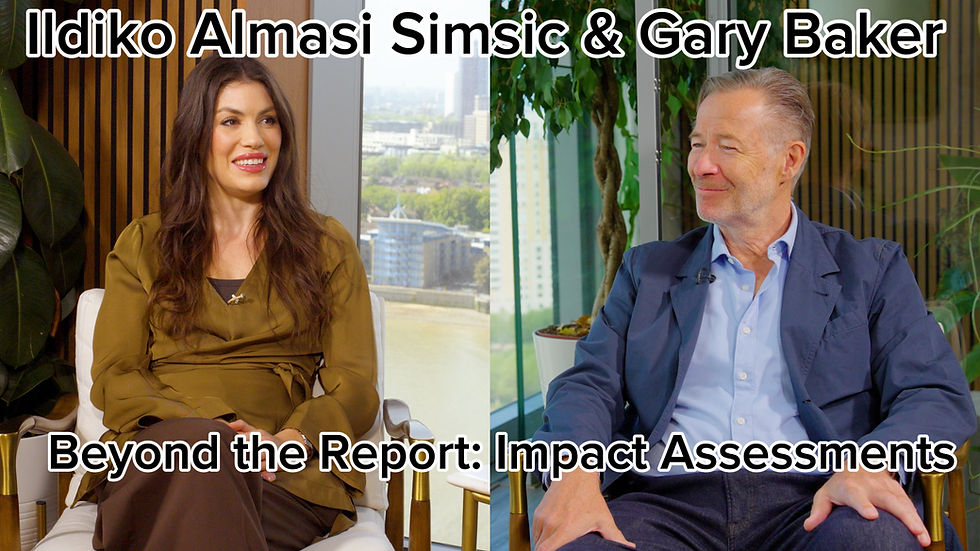
In this episode of the No Nonsense Sustainability Podcast, host Ildiko Almasi Simsic welcomes sustainability expert Dariusz Prasek to discuss the circular economy. Prasek, who has extensive experience with the European Bank for Reconstruction and Development (EBRD), shares his insights on how circular thinking can reshape industries and conserve resources.
The conversation covers a range of topics, including the design of long-lasting products, the concept of waste as a resource, and innovative business models that prioritize sustainability. Prasek also discusses the role of government policies, startups, and financial institutions in facilitating the transition to a circular economy.
Listeners are encouraged to rethink traditional business models and consider practical steps towards sustainability. Prasek emphasizes the importance of systemic change, education, and the need for businesses to adopt circular practices to ensure resource efficiency and economic viability in the future.
Highlights
Dariusz Prasek explains the circular economy in simple terms.
Circular business models can transform product lifecycles and reduce waste.
The role of government and policy in supporting circular initiatives.
Innovative examples of circular thinking in Finland and beyond.
Challenges and solutions for financing circular projects.
The importance of education in promoting circular economy principles.
Practical tips for businesses to start implementing circular practices.
Key takeaways
1. Circular economy involves designing products for longevity and using waste as a resource.
2. Government policies and financial support are crucial for circular economy initiatives.
3. Education at all levels is essential for fostering a circular mindset.
4. Businesses can start with low-cost measures to transition to circular models.
5. Innovative business models like leasing can enhance sustainability.
6. Systemic change requires collaboration between governments, businesses, and consumers.
Timestamped breakdown
00:00 — Introduction & Guest Welcome: Host Ildiko Almasi Simsic introduces Dariusz Prasek, a sustainability expert.
02:00 — Circular Economy Explained: Prasek defines the circular economy without using buzzwords.
05:55 — Circular Business Models: Discussion on how circular models can extend product lifecycles.
09:20 — Global Food Waste Issues: Prasek highlights ongoing problems with food waste and solutions.
13:35 — Systemic Change and Education: The need for systemic change and education in circular practices.
19:20 — Financing Circular Projects: Challenges and opportunities in financing circular economy initiatives.
26:57 — Skills for Circular Economy Experts: Discussion on the skills and mindset needed for circular economy expertise.
32:40 — Simple Ideas with Big Impact: Examples of simple yet impactful circular economy initiatives.
35:26 — Necessity of Circular Economy: Prasek argues why circular economy is essential, not optional.
Edited transcript
Welcome back to the No Nonsense Sustainability Podcast. I'm Ildiko Almasi Simsic, and today we're covering the circular economy. My guest is Dariusz Prasek, who was director at EBRD for a long time. Welcome to the show, Dariusz.
Dariusz Prasek: I'm very happy to be here. If there was one thing you want to be remembered for all these decades of working in sustainability, what would you say was your proudest moment or biggest achievement?
Dariusz Prasek: I think you know, you cannot probably have just one, but I was proud to be a solution finder. So if there was a problem, I didn't try to find the problem; I was trying to solve the problem. So, and I guess that this is what I tried to do over the years that I was at the EBRD.
Ildiko Almasi Simsic: I think that will come handy when we're unpacking the circular economy. I think this is a topic very close to your heart.
Dariusz Prasek: It is, in a way you've come full circle having studied it and ended up drafting a strategy for a country. So let me start by reading a report that is trying to talk about the company's circular economy initiative, and then we can try and define it without using any of these words basically.
Ildiko Almasi Simsic: Okay. Our company is committed to circularity by enabling value retention loops, leveraging design for reuse principles, and embedding cradle-to-cradle thinking into our supply chain architecture.
Dariusz Prasek: Sounds very complicated. So 60 seconds, no buzzwords. What is the circular economy? Circular economy is a way of thinking, a way of thinking which allows us to keep resources as long as we can, to design products that we can use them as long as possible. That means we can repair them, regenerate. It is about using less resources manufacturing products. It is about using renewable energy while manufacturing products. So it is a way of thinking. It is a way of thinking which allows us to keep resources as long as we can save the resources. And why we need to do this? Because we are using too much. We are using definitely too much. We are using 70% more than our planet can actually regenerate. So if we continue doing this, we will use all the resources and with all the consequences having high prices for resources and everything else up to the moment that we will not have resources to manufacture things. So this is what circular economy is about.
Ildiko Almasi Simsic: Okay. Now let me try and explain my understanding on top of what you said. It's also about coming up with innovative ways to use byproducts like manufacturing byproducts in ways that make sense or substituting other materials. So, it's not just keeping things as durable as possible, but it's also about thinking what's the next life cycle for a product if it's no longer fit for purpose for what it was originally designed for, could it be repurposed for something else? And also, what do we do with the byproducts of manufacturing?
Dariusz Prasek: I'm glad you asked this question. Yes, that's absolutely true. In true circular economy, there are no wastes. Waste is always a resource for something else. So, first of all, the driver for circularity is the design that you when you design something you think about the life cycle of a product. You think about various stages. Everything at some stage finishes, but there are components which you can use. But in the production processes, as you rightly mentioned, there are these byproducts, and in an ideal production cycle, we use these products for other things. So we don't produce waste. Nothing is a waste. Everything is a resource. So this is a true way of thinking how we use things and resources. But circular economy is not only this. Circular economy is also about different business models, different business models, different thinking. So it is another driver.
Ildiko Almasi Simsic: Yeah. Because then does it make sense to produce something that people will use forever and then they don't buy another thing? Does it make business sense to design with the type of technology and innovation that will allow this product to live on and have a second or a third life? How does that when you mention business models like how does this circular thinking factor into that?
Dariusz Prasek: I'll give you a very simple example. If I ask you, do you want to have your clothes clean or do you want to be an owner of a washing machine?
Ildiko Almasi Simsic: Well, it's obvious. I just want them clean.
Dariusz Prasek: Okay. If you want them cleaned, then look, there is a way if you buy even the top of the range washing machine, it will become obsolete at some stage. It will die. But if you instead of buying a washing machine, you lease the washing machine, that means someone a company installs this at your home and then you will be instead of buying this for a lot of money, for example, it would cost you about £1,200 or £1,300, you pay £10 monthly for the use and then look what changes. First of all, the company assuming a producer of washing machines is part of this they design these washing machines. So because they need to maintain it. Yeah. So they will replace parts, repair quickly, service this and you know when it is already obsolete and there is something better with better energy use, better efficiency, they will just replace this washing machine. Then it is also in the design the designing this they will think how to reuse the components of this washing machine. So for example, you know, in the old-fashioned washing machines, there was a ballast like a piece of concrete which sort of prevented the washing machine dancing on your floor, you know, when it was sort of spinning. But now what is commonly used is like cast iron. Why? Because you can melt it and you can reshape it to a different washing machine in the future. So what I'm saying I'm giving you a trivial example that the designer thinks up front that I want to reuse the components. Look the same as about electric meters. You know average life of an electric meter is about 12 to 15 years. But components which are used to produce this meter they are quite expensive and not that easy to buy. So it is in the interest of such manufacturer of electric meters to manufacture it that they can take it back. Look this is a win-win situation because then you paid for the meter but then the producer will take it back for a fee.
Ildiko Almasi Simsic: Yeah. So, you know, it's a win-win for everyone. They have components, they have resources, and you got some money, you know, back giving, you know, the old product. So, you see, I'm trying to tell you that it is not just the design byproducts, reusing them. It is also changing the way of thinking and listen waste. Where do we actually what do we waste a lot? Food products. Pass. Use by date, sell by date. I mean we throw away a lot. This is not right. This is not right. We still have in the world problems with feeding people and you know we should actually sell this close to sell by use by date at a discounted price lower price so people can buy this food. So you know there are a lot of digital platforms apps which could be used to tell listen I have something like this and you know I would like to get rid of this. You see this is very popular among bakers for example because they at the end of the day where they didn't sell the bread or other products you know it will be a waste.
Dariusz Prasek: Yeah. And you know this is too expensive too precious product you know to compost it on you know use for just you know something like that it's better to sell it at a discounted price then you know those who normally cannot afford the higher prices can actually benefit from this.
Ildiko Almasi Simsic: Yeah so for like a normal consumer my takeaway from what you just described is that we need to just think differently about how we're accessing services and products in the market because I think not having to maintain a washing machine would definitely convince a lot of people to sign up to the new business model. There's nothing wrong or nothing worse than having to wait for the handyman to come and repair, finding out how much that new component costs. So that's a really interesting aspect of it. And I know there are a lot of initiatives where you recycle your electronics and you sell it back.
Dariusz Prasek: But living a waste-free life or zero-waste life.
Ildiko Almasi Simsic: Mhm.
Dariusz Prasek: Is that just a fantasy?
Ildiko Almasi Simsic: Well, it's not a fantasy but you know we have to be practical there. There will be certain intermediate stages. So you know you cannot achieve 100% circularity. I mean it's impossible you know but you know if we start as I said thinking in a circular way we we may find obvious solutions and and listen this is not rocket science this is you know trying to think out of the box trying to think creatively how to use the components how to use less you know how to replace something with a different business model as I already explained and and listen another example I wanted actually to give you you know there is a company in Finland which does not have any assets but is manufacturing things why and how they identify in existing industrial plants unused capacities one company has a rolling The other company has a foundry. Another one has an assembly line and currently in their production they are not using it. So this company markets that they can manufacture various things using this unused capacities in various other plants. Moreover, they are trying to also think in a way that transport is is a cost and it's also emission of greenhouse gases. So they are trying to for example manufacture the heaviest part in a place when everything will be assembled to avoid the transportation costs. So you see this is using what we already have using it wisely without constructing a new production line. So this is again way of thinking in a circular way.
Ildiko Almasi Simsic: Okay, we've got the thinking and innovation down. Where do we begin? Who pays for it? Is it first policy then we implement? Is it the businesses invest first and wait for the customers to catch up? Like how do we implement it in reality? I know you designed a strategy for a country level. So you have thought through this level of complexity and how do we start?
Dariusz Prasek: Well, this is systemic change. So we have to
Ildiko Almasi Simsic: What is the where do you start the systemic change?
Dariusz Prasek: Systemic change you have to change the whole system it's not that you use just one component so we need capacity building we need training we need to introduce the principle of circularity in the curricula of schools universities but even kindergartens to make sure that we teach these basic things. Then you have to know where you are. That means you have to actually check how circular the economy is or how circular the enterprise is. So you have to measure
Ildiko Almasi Simsic: How do you check that? Is there a framework?
Dariusz Prasek: Yes. You know you have to map all the flows of materials from entering to leaving and you have to identify what becomes a waste and why it becomes a waste. And this will show you the circularity of a plant of a country. And now you have to concentrate on these low-hanging fruits where you can without
Ildiko Almasi Simsic: Why low hanging fruit you know look this is this is not a low-hanging fruit is that means you can pick up the fruit without much effort so what I'm saying that you have to concentrate on first those measures which are easy to implement which do not require. You ask me who pays for this. A lot may not require payment and may bring measurable material benefits. So what I'm saying let's try to do this why because we have to demonstrate to those who doubt that it can be done. Okay. So what I'm saying and then there could be much more sophisticated measures which require preparation of a road map to circularity both for a plant for enterprise for the whole country and where to concentrate on which measures. Look when we were we are talking we are sort of concentrating this on manufacturer user but there are also certain incentives. We are living in a linear world which means we extract resources reprocess them make products used products and what do we do? Throw them away. Yes. So and a lot of our incentives in terms of tax incentives, various type of funds, supporting funds are targeting exactly this linear thinking. So we have to actually think through the life cycle that means not throw away but there is look if you throw away something is there a cost? Of course there is a cost because you have to either reprocess this or utilize or put it in the landfill and you know to design a landfill and operate the landfill at also a cost. Yes. So you have to think about not just selling the product and I wash my hands. You have to actually think what will happen with the product. As you see there is something which is called extended producers responsibility. That means this is a legal scheme in the European Union but many countries adopted this which means that the producer is responsible for the what they produce. This first targeted sort of these more difficult from environmental point of view like electronics like spent oil, tires, batteries, but this is being extended. So then there are companies which actually are created to take these used products and reprocess them, reuse them in a different way. So extended producers responsibility is a very good legal framework. It has to be enacted but it has to be implemented. And to be honest, in this case, I found that small and medium-sized enterprises are a very dynamic part of the economy. And you know when they see this, they seize the opportunity, they jump into this and you know they want to actually use their skills to sort of be part of this extended producers responsibility. Where is the problem? You see the problem is that they have very little experience first of all you know access to technology but also they don't know how to structure this project to access financing
Ildiko Almasi Simsic: Exactly
Dariusz Prasek: Because you see for it most you see when when there is like I've seen in Georgia for example there was a fruit processing company which decided to buy a technological line to produce pectins. Pectins is a component used in pharmaceutical and cosmetic industries and you know it's a commodity could be sold you know anywhere it's a valuable. So they wanted to produce from the skins, from seeds, you know, from the cores of apples these pectins and you know they started to approach the banks. What the banks said? The banks said okay show show me your financing flow, show me your books. And they wanted to give them corporate loan. What does it mean? It's a loan which is based on their financial flow. That means it was you can borrow money for whatever you want.
Ildiko Almasi Simsic: Yeah.
Dariusz Prasek: While look the whole pectin line the cost was about €7 million euro and the payback period was less than 3 years. If it was structured as project financing on its own merit, you know, the risk should be, you know, much much lower and financial institutions, you know, would be more willing to finance this. You remember the trivial example of the washing machine. Look, this from financial perspective changes also the cash flow. Instead of selling a product washing machine, you get the monthly fee. So you know the recovering money it requires upfront much higher capital investment to buy these washing machines and here they are installed and money is coming from this monthly fee. So it changes you know the the flow. So financial institutions, yes, there are working groups among financial institutions to sort of try to come up with products which would cater for the market but at this stage I would say it's the capacity the knowledge is limited and you see most of these type of SMEs who would like to do things there will be startups
Ildiko Almasi Simsic: And startups are perceived as high risk. Yes, you know it very well. Okay.
Dariusz Prasek: And I also feel like you know the issue is not this new type of like business so or service subscription-based services or like this type of business model but it's really the startups that you don't know where it's leading to. And then you know what you mentioned about waste projects. I worked on a few. I visited most landfill sites in Central Asia and there's really limited components on recycling because it's still an expensive thing to do and everybody's convinced that the returns on this investment will be great but the reality is somewhere else.
Ildiko Almasi Simsic: Mhm.
Dariusz Prasek: So how do we how do we make sure that you know we're catering for the startups that are coming up with ways to recycle to manage the waste and is it even startups that should manage the waste because most of the projects we worked on it's falls under government responsibility right
Dariusz Prasek: Look you're right but you know we we will be dealing with various waste streams I mean some of them will be in large quantities lower quantities. For example, there was a company again in Georgia which collected heavy metals like copper, like aluminum and they were producing ingots which they were able you know to sell everywhere as a sort of raw material for reprocessing. So you know there will be smaller type of waste streams and but there will be organizational challenge in terms of having the collection points you know to this. But look coming back to your question how do we go about this? This is a place where actually the authorities policy makers can actually make a difference because they can actually set up some advisory hubs where there will be information both about technology. Of course at the EU level you have circulator where you know they regularly update and you can find technologies but when you have the hub which is stuffed you know with knowledgeable people who can actually advise but also to advise how to structure projects so it is understood by the financial institutions to help them prepare business plan. you know this would actually unlock the potential of these SMEs to to enter the market. So you know what I'm saying yes there is a place that we we need to provide these type of advisory services. Moreover, from financial institutions perspective, to address the issue of startups and high risk, perceived high risk, it would be good to set up kind of guarantee facility which would take the risk. Banks would be much more willing to cough up money, finance this when they would have this guarantee which would guarantee that they will not lose their money. Okay. So this is
Ildiko Almasi Simsic: That makes sense.
Dariusz Prasek: Yeah.
Ildiko Almasi Simsic: But is this guarantee should it come from the government or should it come from a development finance institution?
Dariusz Prasek: It can come from both. I mean it could there could be national and there are you know in Armenia there is something which is called enterprise Armenia. This is a fund you know which actually is designed to to provide this type of guarantee facilities. But it could be provided by multinational development banks as well. Why not? I've been trying to convince our alma mater EBRD that such a facility would unlock a lot of potential.
Ildiko Almasi Simsic: Yeah, I'm sure it would. And then the other question that came to mind when I was researching this topic is what what is the expertise you need because it's such a complex topic like as you said you need to understand the business model you need to understand business strategy accessing finance but you also need to understand the technical aspects how do I design a better product how do I manufacture a better product what how do you know like and as you said some things are free. You just need to think differently and come up with these simple solutions. So what makes someone a circular economy expert?
Dariusz Prasek: You see I'm glad you asked you know this question but I want to go back to what I said at the beginning. This is way of thinking. So you know we need we need technicians. So we need designers, we need financial specialists, we need lawyers you know we need teachers who actually can explain the circular way of thinking you know which means in simple words using our resources wisely so they last and we can use them in perpetuity in a way. So yes, this is something it's you don't have circular economy specialists as such. Well, some people call themselves that
Ildiko Almasi Simsic: They may they may you know they many people call themselves various things you know there are a lot of ESG specialists these days but no seriously this is a way of thinking of course you know there are designers who are specializing in designing so we can use components and look the car industry was probably at the forefront where they knew that designing a car can actually may mean that we can reuse many components of this car in in in the future. So, and they are still at the forefront, but it's across the industry currently. There is those who think about economic models, how to actually use it in a way that we can actually provide service rather than a product. Which I mentioned as an example. those who are providing legislation that means the incentives needed to encourage those who actually operate in the life cycle of a product like extended producers responsibility. So and but first of all you know I think it should be included in the in the curricula of teaching at the universities is an obvious thing but in addition to universities you have to target children.
Ildiko Almasi Simsic: Yeah.
Dariusz Prasek: And to be honest you know I think I mentioned to you in the past that my daughter granddaughter is a chief enforcer of circularity measures at home. you know she is convinced this is how we should be doing this is how we should be recycling this is how we should be reusing materials and you know I'm not joking even in a kindergarten you should actually include the principles these little souls you know they are like sponges you know they absorb this and they are convinced and they are using this you know so
Ildiko Almasi Simsic: No I know and I know you teach at the university so you encounter the those people as well who are a bit more grown up and have their own ideas. So, how do you what what are the main principles that you're teaching when you're lecturing at a university?
Dariusz Prasek: Well, it all depends who is it for. when I'm doing the technical university, I concentrate more on technical aspects of design and the whole technological line production byproducts as you mentioned, you know, how to reuse them, how to use less energy. For example just to give you an example recently I was working with a pharmaceutical industry where when they package medicine there are ways of avoiding you can can you imagine how much waste is produced from these bubbles from this packaging of various medicaments? No. So you know you can actually have wise ways of you using biodegradable material which sort of can be decomposed you know in nature using much less of this plastic so you know using without this sort of you know paper cover into this you can achieve quite a lot so you know this is technical aspects but you know when I'm talking to MBA students We concentrate all more on economic models. How to how the cash flow changes, how actually the risk changes, who should absorb the risk, where the legislation is needed to unlock certain potential. So yeah,
Ildiko Almasi Simsic: What were some of the amazing ideas that you you've heard from your students? Was there anything outstanding or particularly innovative that you can recall? I haven't heard you know from from students you know any really fantastic ideas but what I was actually quite pleased to see that for many of them it was an eye-opener that you know you can think differently and you know most of them pledged that that they will be using this in their both scientific work and in future lives and and one one of the mentioned, I will definitely teach my children, you know, how to behave in a circular way. But listen, some some ideas are are very simple. There was it started in Finland a very successful company, three ladies who started to produce patches adhesive patches when you know you had clothes which was you know stained or which was like broken. instead of sort of throwing it away or repairing in a traditional way, they put these adhesive patches on their trousers or whatever. It became sort of like a fashion statement that you have these patches you know in various places. This was you know a company which started in a garage. There were three of them. Currently I haven't checked you know the current but you know at the end of last year they had the turnover of 10 million euro and they were trading through the whole Scandinavia on these patches adhesive patches.
Ildiko Almasi Simsic: Wow.
Dariusz Prasek: So you know simple idea but principle is the same.
Ildiko Almasi Simsic: Yeah.
Dariusz Prasek: Keep my clothes longer repair it make it fun you know. So and look when we are at the fashion industry I'm sure you heard that many people you know are sort of trying to exchange you know clothes you know so they actually you don't buy expensive item and when you get bored it is in your wardrobe forever and no you can actually put this trading places where you know and these became very popular recently I went to one this sort of marketplace place in Warsaw where people were actually trading the sort of, you know, unwanted, pre-owned, beloved, you know, things.
Ildiko Almasi Simsic: That's amazing. So, now let's let's get to the let's get to the next segment where I'm going to ask you, is it real or is it greenwash for circular economy? So, we've talked about some of this. What about repair programs with barriers?
Dariusz Prasek: Like a company offering a repair service, but it's less accessible or there's like cost or condition restrictions.
Ildiko Almasi Simsic: Well, it depends. Yeah, of course. You know it all it's it's question of a context but let's try to to think in a simple way. You ask me is it real or is it it is real. It's not only real. It's a necessity. You know, if we continue acting like we've been acting in terms of using throwing away, we will get into the barrier of not having resources. And think about implications. If something becomes scarce, of course you encounter problems with finding this. But what is the implication? the price goes up. Countries which have these resources introduce trade barriers. We recently hear about trade barriers a lot. Yes. So you know what I'm saying? It it sort of destabilizes the market. So I'm absolutely convinced and I'm trying to convince as many people as possible that circular economy is a necessity. Now you mentioned repair. Okay. You create a network of repair shops which would be probably part of this extended producers responsibility where you can prolong life when you can replace certain parts with new parts make it more efficient. Look what social implications you have. You have employment in these workshops. Moreover, you create a need and I know it could be a buzz word reverse logistic.
Ildiko Almasi Simsic: Yeah.
Dariusz Prasek: What it is? What it is? It is that you take people goods which were used require to be repaired or renewed from people to these workshops. Yes. So this is not logistics which delivers things but takes to these workshops again creation of jobs. So what I'm saying that circular economy has a potential to create new jobs which is socially good thing.
Ildiko Almasi Simsic: Yeah. Okay. How about bio-based plastic labeled as eco-friendly?
Dariusz Prasek: Biodegradable plastic which decomposes in nature is probably at this stage a necessity in my humble view we're using too much for packaging. You know when I was growing up we had a lot of you know recyclable bottles and and whatever. these days everything is sort of packed in plastic. So this biodegradable plastic or less plastic is a good thing in terms of because it it sort of reduces the material in terms of when we are trying to use less but at the end of the day we are facing a lot of problems with microplastics with these plastic components ending up in oceans in the bellies of fish in in muscles of animals. So you know we have to prevent environmental disaster from this. So biodegradable plastic bio-based plastics in my view it's something which is interim which is needed at this stage and you know you have very nice technologies these days that you know you when you package something you just spray the foil over this you don't need actually to have and then you know you can actually throw it to nature compost it So it is less of a environmental impact at the end of the day.
Ildiko Almasi Simsic: Okay. How about modular product design?
Dariusz Prasek: This is what I mentioned at the beginning. This is the designing of products that you can use components not necessarily to produce the same product but use components for something different. So modular production is one of the drivers for circularity. That means having the the whole thing is that when we manufactured something we created a value when you throw it away the whole creation of this value disappears.
Ildiko Almasi Simsic: Yeah.
Dariusz Prasek: But when you can use components, use byproducts and give it a new life. And you know there are two concepts this new life that could be upcycling or down cycling which means we can produce something which is of higher value.
Ildiko Almasi Simsic: Yeah.
Dariusz Prasek: Or produce something which is at lower value but costs less.
Ildiko Almasi Simsic: Okay.
Dariusz Prasek: Okay.
Ildiko Almasi Simsic: No, that's interesting. We we kind of talked about fashion, but what about those those brands that claim that their fabrics are blended, recyclable in in fast fashion?
Dariusz Prasek: Well, you know this is step in the right direction that there are many companies which you reuse fiber from clothes. And when their products are designed that you can reuse every component of this and many countries actually introduce legislation that you are not allowed to to dump clothes together with mixed waste. For example, in my home country in Poland, you know, this is a requirement and you know they are reprocessed. But you see they got there is certain elements some people are sometimes worried that there is this collection of recycled materials but it ends up everything in at the landfill together.
Ildiko Almasi Simsic: Yeah.
Dariusz Prasek: I'll tell you why. Because there is something which is called economy of scale. You have to you have to make people to enter certain habit that they recycle they collect separately. After a while when they do this you have higher amount of these products and then it is worthwhile reprocessing this. If you do not have stable supply of these resources and you know in Georgia there is a fantastic reprocessor of plastics but where is the barrier? The barrier is that the government did not arrange the sort of collection points for plastics and most plastics end up as mixed waste. So they are facing a barrier of actually having these plastic bottles which you know end up in mixed ways. So I try to explain to you that you have to have certain amount that it is worth doing it.
Ildiko Almasi Simsic: Yeah. No, it seems like we're coming full circle on this with all the different actors how how the government is introducing the policy that supports the businesses that cater to this new mindset customers who are just thinking in this new innovative way. So if someone is listening or if someone is a founder of a company and they want to get three practical tips on how to identify ways to make their operations more circular. What would you say are the most simple most like or the cheapest ways to achieve this?
Dariusz Prasek: I'm actually very pleased that you ask you know how do you do this in the company? You have to have champions in the company. That means you have to empower people you know unlock their potential in a way not be hierarchical as it is in the traditional companies but actually allow people to come up with innovations. Look at flows of material within the company. Am I using the right amount of resources? Do I produce waste? Do I produce products? Can I replace energy with you know can I put solar roof in instead of you know using gas or something like that. Then this is the basic sort of step try to identify the flows empower people train people in terms of raise awareness. So go for transparent information within the company at that stage you know also work with the peers with work with other companies doing the same particularly in your supply chain.
Ildiko Almasi Simsic: Yes.
Dariusz Prasek: So you see this is actually there is a British standard British standard institution published this is a voluntary standard 8,000 which is actually how to change the company to go more circular. So you know what I mentioned to you of course this is the basic step then low-hanging fruit which you know you buzzed me for try to identify what I can fix quickly then what requires the more sophisticated measures bringing some specialists who could advise on this and you know and then go in the whole loop. So you know once once you have the measures go again look again at this this is a cycle in a way. So you know that way you can actually improve the whole process which would be conducive to reducing a waste which require you know final disposal and will make the process more efficient. I'm always advocating to go first for those which are low cost or no cost measures.
Ildiko Almasi Simsic: Exactly.
Dariusz Prasek: At some point you know when I mentioned to you for producing pectins you have to buy sophisticated equipment. Yes. No doubt about this. But you know what what would be the alternative? These seed skins would be composted. Yes. Composted. this is too valuable resource you know to compose this you know you have to give it
Ildiko Almasi Simsic: A bit of a boost to increase the value recently I came back from Mongolia where they have a lot of yaks
Dariusz Prasek: And you know yak leather is a fantastic leather the best winter shoes are made of yak leather look there is a lot of the small manufacturers which do the basic tanning the basic sort of preparation of skin they are still using toxic chemicals for this. So you know there is a program to to replace this to help them what for because if they use better products if they trace this from the yak owner through processing and everything they can access more of world markets.
Ildiko Almasi Simsic: Yeah.
Dariusz Prasek: Which means higher price for their letter. So you know this is what I was interacting with yak herders to actually help them. There there is a program sponsored by the European Union. This is a pilot program but you know this is the one of the key sort of occupation is actually herding animals in in in Mongolia. So you know this is one of the key industries over there. No, this is fascinating. I would certainly try the yuck leather shoes for the winter in Eastern Europe. Thank you for being here, Dariusz, and sharing your insights on the circular economy. This was it for today. I hope you got closer to be inspired on how to go circular. We have come full circle, explored it from all different angles, and I'll see you next time.


Comments