


Energy Transitions: Strategy and Reality with Mehmet Öğütçü
Watch the episode
Summary
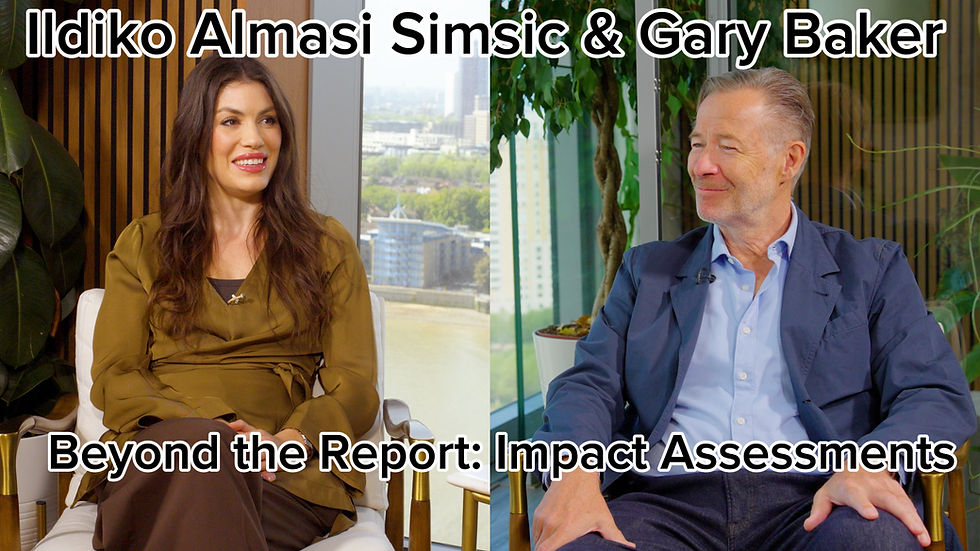
In this episode of the Non-Nonsense Sustainability Podcast, host Ildiko Almasi Simsic welcomes Mehmet Öğütçü, an expert in energy policy and geopolitics. The discussion centers on the complexities of energy transitions and the challenges of achieving net-zero emissions. Öğütçü brings a multidisciplinary perspective to the conversation, emphasizing the need for an integrated approach to energy policy.
The episode delves into the realities of energy transitions, discussing the ongoing reliance on fossil fuels and the increasing demand for energy. Öğütçü argues that a pragmatic approach is necessary, one that includes a mix of energy sources while working towards reducing carbon emissions. The conversation also touches on geopolitical influences, the role of emerging economies, and the impact of energy policies on global markets.
Key insights from the discussion include the importance of balancing energy needs with environmental concerns, the role of technology in greening energy production, and the geopolitical dynamics that shape energy strategies. Öğütçü stresses the need for visionary leadership and international cooperation to address the challenges of energy transitions effectively.
Highlights
Mehmet Öğütçü emphasizes a multidisciplinary approach to energy policy.
Energy transition is a continuous process, not a short-term shift.
Fossil fuels still account for 81% of global energy consumption.
Geopolitical factors heavily influence energy strategies and policies.
Emerging economies play a crucial role in global energy dynamics.
Technology is key to reducing carbon emissions in energy production.
Visionary leadership is needed to navigate energy transition challenges.
Key takeaways
1. Energy transition is an ongoing process requiring a mix of energy sources.
2. Fossil fuels remain a significant part of global energy consumption.
3. Geopolitical influences are inseparable from energy policy decisions.
4. Technology can help reduce the carbon footprint of energy production.
5. International cooperation is essential for effective energy transitions.
Timestamped breakdown
[0:09] — Introduction to Energy Transitions: The host introduces the topic of energy policies and net-zero initiatives with guest Mehmet Öğütçü.
[1:37] — Understanding Energy Transition: Öğütçü explains why energy transition is a continuous process rather than a short-term shift.
[2:44] — The Role of Fossil Fuels: Discussion on the ongoing need for fossil fuels in the global energy mix.
[5:16] — Geopolitical Influences: Exploration of how geopolitical factors impact energy strategies and policies.
[9:14] — Emerging Economies and Energy: Öğütçü discusses the role of emerging economies in global energy dynamics.
[13:28] — Impact of Energy Policies: Analysis of how energy policies affect global markets and competitiveness.
[24:23] — Nuclear Energy's Role: Discussion on nuclear energy as part of the green transition and its challenges.
[36:25] — Global Action on Climate Change: Öğütçü highlights the need for international cooperation in addressing climate change.
Edited transcript
Welcome back to the non-nonsense sustainability podcast. Today we'll be discussing the messy reality of energy policies and net-zero initiatives. My guest today is Mehmet Öğütçü from Turkey, who has a long history in international diplomacy, being an advisor and board member of various companies, including renewable energy and gas. He is also a strategic thinker who has worked with the Asian Development Bank on their 2030 energy and infrastructure outlook. Welcome to the show, Mehmet.
Mehmet Öğütçü: Thank you. Thank you, Almasi.
To kick things off, what is the one thing you wish more people knew about you?
Mehmet Öğütçü: Well, let's skip this part. I don't like talking about myself, but just one sentence perhaps. I've been in government, I've been in business, international organizations, think tanks, media. So perhaps I have a perspective which is multidisciplinary. I can see things from different angles. This is what we need in the energy world as well. Not focusing only on technical, financial, environmental, or geopolitical aspects, but an integrated approach. Probably this is the strength I can bring to the table.
Yes. No, absolutely. As a reminder, we have Bob the buzzer here who will give us a gentle nudge when we slip into the jargon or the buzzwords of energy transition. So if you had to explain in simple terms what energy transition and net zero is, what would you say?
Mehmet Öğütçü: Well, to be honest, I don't like the terminology energy transition because probably it's the perpetuation of energy dynamics. We moved from coal, from wood to coal, then from oil to natural gas, nuclear, and now renewables, God knows what next. So we have been continuously in a transition process. Perhaps this is the rethinking, restructuring, reshuffling of various dimensions of energy and the fuels. So energy transition is something that we are experiencing permanently. So transition gives the impression that it's a short period of time from one thing to another we are moving. We will not, I mean, take the example of fossil fuels. We want to get rid of them. Yes, because of the decarbonization process.
How can you get rid of fossil fuels, namely oil, gas, and coal? Because they currently represent around 81% of the world's energy consumption and production, you might say. So, and from today to tomorrow, you can't do it. It's a long, long process. And also energy demand is increasing significantly with new population joining us on this planet and also income levels and standards are improving. So we will need more and more energy. So I belong to the school of thought that we need more energy across the board. We need coal, we need oil, gas, wind, geothermal, solar, green hydrogen. We need all of them, ideally greening them. So get rid of the carbon emissions which is contained in most of the fossil fuels. That's the way going forward in my opinion.
Yeah. No, I agree with you. It has to be pragmatic and from a practitioner perspective every project no matter if it's fossil fuels or renewables has project specific impacts on the site, on people, biodiversity, groundwater, you name it. But this energy transition with this net zero aspiration is kind of packaged as a clean break or a green energy transition. Is that misleading the public?
Mehmet Öğütçü: Well, I think we need this narrative. It is obvious and imperative that we need to clean our energy in whatever form it is. We need to green it as well as much as we can because the green areas not only in energy but in also forestries, agriculture, production, all of them are being depleted in our planet. So more focus we give to green and clean, better of course, but in reality I think there is also a greenwash that we have been talking about because I mean it's not green when you talk about the solar and wind or geothermal because they have huge implications for environment, for health and other matters but they are less perhaps harmful than others. So therefore they have lower carbon content compared to perhaps other fuels that we have been using. So we have to make this distinction. We cannot just brush aside all the energy that we've been using, terming them as dirty, carbon intensive, we need to get rid of them. I think the new generation, especially Z generation, is inclined to think that way.
Yeah.
Mehmet Öğütçü: Oil, gas, coal, they're dirty. Let's get rid of them and we need to focus only on geothermal, solar and wind. I think that's a mistaken perspective. We have to put everything in right perspective without being blind to the negative impacts of whether it's cleaner or dirtier fuels. So what we need I think is the real look at Africa for example and Africa's role in global emissions, carbon emissions is only 3%, 3.5% perhaps.
Yes.
Mehmet Öğütçü: Still we ban on the heads of the Africans, clean your energy, don't use coal, don't use oil and gas. Almost 600 million people in Africa do not have access to commercial energy, let alone wind or solar or coal, oil or gas that they need energy to mobilize themselves to sustain their lives.
Yeah. Exactly.
Mehmet Öğütçü: And even such a small percentage that we are making a big case out of it.
Yeah. And I think a lot of these financial institutions who are on the market of development finance, they introduce policies that do not allow the financing of fossil fuels anymore. And that's why a lot of this development finance money that's going into Africa, it's directed towards renewable when in fact as you said the energy transition should be an expansion with renewables, not a complete transition into just solar and wind.
Mehmet Öğütçü: Yeah. And I don't mind putting so much emphasis on reducing carbon emissions in the United States, in China and also in the European Union because they are the biggest emitter of carbon dioxide in our planet. Whereas in Latin America, Africa, Middle East and Southeast Asia except perhaps India, these are negligible amounts. So we have to differentiate it. Then also we shouldn't use green as a political weapon in our hands or commercial instrument as EU is trying to do now with the green deal. Okay, you can apply green deal in your own union, 27 countries. But then you have this carbon tax and also on the border when you bring your products and services produced let's say in Morocco, Brazil, Turkey, India wherever and then you also force them to apply your own standards and so using a green deal as an instrument to bring other countries into line with what you want to achieve in your own 27 countries. Yes, exactly. Can energy ever be apolitical?
Mehmet Öğütçü: Oh, no way. No way. Energy and geopolitics are always treated together. They cannot be treated in isolation from one another. We have seen this throughout the history. I don't need to say about it. Most of the wars actually in the past were related on sharing energy resources or controlling energy resources. I think the same will hold true in the future for critical minerals like lithium, cobalt and nickel and also rare earth elements which are intensively used in renewable energy, electrical vehicles and space and ocean technologies and so natural resources will always be in scarce quantity. Therefore, countries will be vying for influence or control of these resources. That means in the past wars. But in today's world, I don't think that it's going to be only hot wars, but we will have different types of wars and not limited only also energy critical minerals or rare earth elements, but also for food supply and water supplies which will be in greater danger of falling short of the demand. And then there will be confrontations for making sure that there is food security, energy security and water security in the future.
Yes, exactly. And I think on the social dimensions, the governance in Africa and some other Southeast Asia over who owns the natural resources or who has access and who can benefit whether financially or otherwise from the ownership of these assets that link to energy generation or just natural resources has been a topic of discussion in my line of work as well, because often what happens is you have the foreigners. They control only the asset and they employ the locals in line with the often very weak local labor laws without any sort of commitment to employ or to improve their working conditions and implement global standards.
Mehmet Öğütçü: Definitely. And in this regard actually also the game has changed. The rules of the game changing also the players are changing. Who is controlling cobalt now in the Democratic Republic of Congo and who has the upper hand in walls LNG? It used to be Qatar and Australia afterwards. Now the US and Russia will become major players in LNG. So the players are changing. The same goes with oil. Saudi Arabia and Russia, yes true, but what about US? Nobody knows that US is the number one producer of crude oil in the world and set to become the same in natural gas. China is the biggest consumer and the biggest consumer of not only coal, oil and gas but also for nuclear related and LNG as well. And so the game has changed. Therefore, we have to understand this new dynamics coming into our lives and as producers should also carefully align themselves with the new players who are going to produce more and who is going to demand more in the future. So this is not the same picture that we had 20 years ago and it's going to be in constant changing and this is going to create frictions. Look at Russia.
Yeah. I mean one of the reasons why the war is going still ongoing in Ukraine is and both Russia and the western countries opposing it are using energy as instruments of political power. So Russia has been now totally excluded from oil, gas and coal trading with the European Union. There are still some LNG pockets and small pipeline gas supply but I think by 2026 and it will be totally phased out and that's also one way of perhaps depriving Russia of the revenues coming from hydrocarbon exports that is financing war in Ukraine and elsewhere in the future perhaps US is also using heavily its own energy resources. Look at the countries which are under heavy US sanctions like Venezuela, Iran, Libya and Iran and others. They are all biggest holders of oil or gas reserves and now they are being pushed out of the international market so that European and US firms could have the upper hand.
Yes, exactly. And if we translate it into the real life of people in Europe, the war between Ukraine and Russia also led to energy shortages, price hikes. Does that mean that the energy policy that the European countries have been implementing is not working without reliance on Russia?
Mehmet Öğütçü: I think that's a very good point. I think we are paying the price of geopolitics played by Western powers. Literally, because as you said, I mean, after getting rid of the Russian gas, for example, in the European Union markets, which was much cheaper pipeline gas than the LNG brought in, and the prices now in the EU markets is almost energy prices four, five times higher than in the US itself. So, it created a decline of competitiveness not vis-a-vis US, but also vis-a-vis China and other major producers. So that's that triggered the decline of European manufacturing power and export competitiveness across the board. And now increasingly also in order to counter the Russian security threat, European Union countries will be increasing NATO countries most of them will be increasing the share of defense expenditures in GDP up to 5%. That means there will be less and less resources for prosperity and infrastructure projects needed. Therefore, geopolitics and energy are depleting the resources and also causing decline of power in European Union countries. Unfortunately,
and we haven't even mentioned the just transition where no one's left behind and people will transition into new jobs and the world will be a better place. So, what's your take? What is the reality in terms of just transition for Europe? Are we going in the right direction?
Mehmet Öğütçü: I think these are nice words and we all want fairness, equality and everybody on this planet, 8 billion people have access to energy, clean energy, clean water and also sufficient food. But the reality, stark reality tells us something different. Unfortunately and throughout history this has been so human beings are a bit greedy and also so much self-centered and in such a situation and I don't think that our priority is to feed Africans or bring greater source of energy to them cleaner energy cleaner water and it's not just in any ways a tiny percentage of the world population enjoying the status proportion of resources in terms of finance in terms of prosperity in terms of quality of life and I don't think that this is going to change anytime soon I think here another aspect that we have to bring to table is that we lack strong visionary leaders and we don't respect any of the global leaders now on the stage be it from the US Russia China or European Union. You remember also the new world order established after the second world war. Bretonwood system, UN and institutions like World Bank, IMF, World Trade Organization. Now we're expecting a similar new world order to come into picture after the collapse of the Soviet Union. How many years passed? What happened? Where are we now? Totally this total disorder, new world disorder, chaos, instability, conflicts. And do we see any signs of this changing? No. Because there is multipolarity now evolving rather than you know in the past we had two superpowers Russia and US. they were somehow among themselves sharing the spheres of influence around the world and resources and they had order but now you have the BRICS nations you have the EU you have China, Russia, India, Brazil individually as well and but things are not evolving in such a way that the new world order will bring the relative power China is so right now for demanding a new reconfiguration because they are right now the second largest economy in the world. If you ask my opinion, they are the first actually they are the largest economy. If you calculate on the base of purchasing power parity plus Hong Kong, Taiwan, Chinese populations plus Singapore, Malaysia, Indonesia, Thailand where the ruling political and commercial elites are Chinese origin. They are already the biggest economy in the world. But let's assume only people's republic of China and every indications and every projection show that in the next 10-15 years they will be the largest surpassing US then India is coming deter therefore this has to be reflected somehow in the new world system if you don't and there will be always revanchist there will be always revisionist powers steering the troubles around the world so therefore we are not going to have a just international system where poor, rich, middle income will be living coexisting side by side and that's a that's a very supreme ideal. We all want this to happen. I have a bad news for you. This is not going to happen anytime soon.
Yeah. And returning to China. So it was in the news that they started the construction of the Madong dam which is the three times the capacity of three gorges and it will impact water supply in Tibet and Pakistan and India downstream and they did that without any international financing. So they followed their own legislation had no consultation impact assessment is from 2011 buried in other strategic documents and is them is going forward. You know I've I've worked on a lot of these projects that were green and renewable and especially hydropower has always been particularly problematic from the social perspective like the land take people need to move creating reservoirs. What's the environmental flow? Will the ecosystem change downstream because of these dams or because of this one dam and how to go about it? And for me, what's particularly troubling in this instance is the lack of international coordination. They're basically taking charge of a very valuable natural resource without discussing it with any of the downstream countries.
Mehmet Öğütçü: That's true. But think about it from a different angle. One is China, you know, one in every five in the world is Chinese 1.4 billion people. India the same another 1.4 billion population and this population needs food energy and water and energy is in short supply always. China is the biggest user of coal power as you know this is a huge drain on world's climate change agenda and therefore we're encouraging Chinese to use more climate friendly energy fuels so that it will contribute to global climate change efforts and I visited because I work in China as a diplomat and I visit also three gorges dam when I was working for international energy agency. And we were damned against it because it changed the environment, population being dispersed and redeployed in other parts. Plus historical heritage has been under the water then as a result. I visited these villages and they built it and because the argument was we need this energy energy for us more important than the historical heritage and environmental degradation. And now they are doing the same thing with the other dam that you mentioned so many times bigger than three gorges dam. I witnessed the same thing in Turkey in my own country build a dam and this dam for this dam they had to also collect waters from all the rivers flowing into it and it destroyed a 3,000-year-old historical heritage there and buried under the water. Some of them have been re-transferred somewhere else but it doesn't work that way. The climate also change and in this area and I think we are going to see more and more of that. So the discussion is energy versus historical heritage environment security and which one are you going to pick up? My choice is quite clear but the decision makers of course if they are coming to power with the popular will through the elections or like in China they are installed there by the communist party and now they don't Xi Jinping doesn't even have any constitutional limit to his term it's lifetime almost then how are you going to impact that and they don't need also international finance and they don't want to have any external interventions. This is seen as an intervention in the domestic affairs and so this is very complex situation unfortunately and I don't think that since countries will be so much focusing on their own national interests their own population and country and global actions will not be very effective unfortunately and we are living you know there is no border for climate change I mean now in I'm in Turkey in my country house in Çeşme across the Greek islands of Chios and the heat is incredible. We never seen that in the past. Even in this season, the same I was in, you know, couple of weeks ago in London. The heat and the warming were unparalleled. And I hear the same stories from elsewhere. And it's not going to change. It's going to be worse and worse in the future. And this is also propelling us, compelling us to act together. However, it's not happening and it's not going to happen. There is no strong leadership. There is no enforcement mechanism that can bring countries into line because whatever they do will be affecting us across the borders. The same with nuclear nuclear power plants.
Exactly. So nuclear is often said as a savior for this green transition especially the new generation four five small reactors where even the waste is minimized. And I've seen how the World Bank has taken steps to be able to fund some of that and under the EU green deal, there's also some inclination to get back into funding nuclear. What's your take on that? Is it real that we will be using nuclear again?
Mehmet Öğütçü: Well, right now the share of nuclear in the world energy is around 10%. And there are hundreds of nuclear reactors around the world. China is leading the way. But you also have other major nuclear power constructors like Korea, Japan, US, France, Sweden, Canada and but I don't believe in this white elephant big projects. In Turkey we have the Rosatom built nuclear plant in Akkuyu. The cost was initially $20 billion. Now then they increase it to 25. Still there's financing problems. I think it will end up probably around $30 billion and it takes 15 years to build and still you have the nuclear safety issue and also waste management and human capital. There are so many issues related to it, but it's also very expensive compared to renewable energy. However, we need all types of energy in the world, nuclear included. I'm not against it. What I'm against is the huge waste and also nuclear safety, you know, issues related to that and the new technologies. There should be transparency and accountability very clearly and strategic communication with the people afraid of it. I mean in France I saw nuclear power plants next to a graveyard grape production or food production. So it is possible perhaps and SMRs as you mentioned are now seen as a new saver because quickly you can build SMRs small modular nuclear reactors. It is inexpensive. You know, 300-400 megawatt you could meet for 400-500 million rather than waiting for $30 billion and 15 years duration.
Kazakhstan, Saudi Arabia, Abu Dhabi already built and Finland building Egypt and also Jordan are talking about it and therefore I think we still have a nuclear renaissance that will continue and it add value to our energy stocks. So we need as I said in the beginning coal, oil, gas, nuclear, green hydrogen, photovoltaic, solar power, wind, geothermal, all of them we will need and hopefully producing them in such a way that we will be able to clean and green them as well rather than totally abandon these resources. We need them in a cleaner fashion. This requires technology. Thanks God. We are moving into that. You know AI facilitated technologies might help us in many regards in terms of demand management as well as grid management plus the dirty fuels could be cleaned through new technologies.
How?
Mehmet Öğütçü: Well, you have to invest heavily on that. I mean AI now you know the opportunities and facilities that it bring to table even this chat GPT what it brings to our life in terms of research sometimes you have to be careful about it but it will be developed and then we will also robotic systems come into picture and energy production will become cheaper and more efficient. I mean we are using it in the oil fields. It helps us significantly. Algorithms are more important than our traditional methods.
Yeah.
Mehmet Öğütçü: So there will be more efficiency in production. Perhaps we should also focus on how to green and clean the existing production methods.
Yeah. I think when it comes to AI, a lot of the critics mentioned data centers energy use as one downside. But I think it's very clear that when we are discussing energy and energy politics and policies, it's always a tradeoff. There's not one type of energy that's just beneficial without having any adverse impact whether it's on the site or geopolitics or related to the strategy. So when it comes to AI, we would also have to balance the benefits with these adverse impacts. And in fact, there has been several initiatives to fund green data centers that meet like the edge requirements that operate in an energy efficient way and a lot of the biggest AI players invest heavily in renewables specifically to power their data centers. Right.
Mehmet Öğütçü: Yeah. But I think it depends on the human beings. You know when I was in OECD I was the head of the international investment and there we had a slogan or moto how to maximize the development impacts of foreign direct investment. It depends on the policies instruments at hand for the host governments for the decision makers. If you let the foreign investors enter your country freely, do whatever they like, you won't get the development benefits at all. Therefore, the same with AI, how are we going to use it? maximize for our own benefits for environment for development for human how it's going to affect our employment because now more and more people will be taken out of the job markets because AI will do it much better than us and quicker and more efficiently. Therefore, it will attack every aspect of our life. So it depends on how we going to use it. Do we have this conscience? Do you have this policies already crafted foreseeing what might happen in the next 10 years, 20 years and 30 years? A futuristic vision and projection is very important like we do in energy because you know in the year we used to have this projections to 2030 when I used to work then 40 and 50 now and no matter whether we will be able to track that or be very you know on the point of achieving the goals but it's always good to have a sense of direction even if you don't meet the targets or projections have a sense of direction where we are going try to influence try to shape what the course of action and history will look like down the road in 30 years.
Yeah. Exactly.
Mehmet Öğütçü: We may not leave that we may not be in this world perhaps for our children and our grandchildren.
Yeah. But then it comes back to your example on OECD like what gets funded and how and that's usually decided in the headquarters in these developed countries based on people's ideas research papers studies country specific statistics but there's with this ESG and green push there was such a bias towards renewables that over the past five seven years almost all of my energy projects were solar or wind not even hydro.
Mehmet Öğütçü: True and I think I like the moto as well follow the money so wherever money is flowing that's the reality and all the policy makers also change their directions I mean if you look at the global energy investments global wide worldwide and two-thirds of them are moving to the renewables efficiency and other technologies is while fossil fuels are left behind. Now with Trump perhaps this is going to change a bit because his strategy global energy dominance by the US is based on drill baby drill and therefore I think funds will be available now for fossil fuel investment. Otherwise down the road in 3 years we are going to have a very serious supply crunch for oil. There would be less oil, less gas produced if there is no money flowing there for new investment. We have to expand it. We are now producing around 100 million barrels per day of oil. But if we don't increase it to let's say 120 in the next 15 years and I think with the current trend in demand structure especially for the transportation sector no matter whether electrical cars will be widely available we will have serious problems because oil is not used only in transportation but also petrochemicals and other areas and therefore I think the investments should also be wisely distributed. across the board, not leaving it only to the financiers or the international organizations favoring one over other and you may remember that IEA for example where I used to work and at some point they said you know there should be no investment in the fossil fuels focused on renewables. This was a political signal they received probably from the EU countries and now the US president new President Trump of course is more fossil fuel guy supported by the US multinationals as well IOC's and he changed the policy and I saw also clearly that IEA has changed his language and now giving more and more emphasis also to the or in a balanced way to the fossil fuels as well or the nuclear lobby or anti-nuclear lobby, you know, cause Germany to phase out all the nuclear power plants. Now, under the current circumstances, they need energy as much as possible and as affordable as possible for maintaining competitiveness. I think the new government, CDU-led government in Germany, I think they regret that they let the nuclear power off their hands. Perhaps they are going to build new nuclear power plants in order to continue to have their competitiveness and supply as required in the country. Therefore, I think sometimes the political leadership makes decisions has decisions based on the current circumstances.
Yeah.
Mehmet Öğütçü: Whereas the leaders should think about the long term and the future with different options in their hands.
So how do we futureproof our energy strategy?
Mehmet Öğütçü: Well, I think that's a difficult question and I can assure you that there is not going to be a global response to current energy crisis. Yes, OPEC will try to influence the market share and the price of OPEC plus I should say. US will have its own global energy dominance strategy. Russia is an energy superpower irrespective of its political military actions and I think domestically every country should rely on their competitive strengths. In some countries renewable energy is the only way forward. Turkey also I mean Turkey imports 98% of its natural gas and 95 92% of its oil. Therefore, I mean, if we reduce the dependence on fossil fuels, this is going to be a wonderful thing. And Turkey is a country where you have huge opportunities for solar and wind. This is happening already. And also in power generation right now, I think Turkey has around 58% in installed capacity renewables. That's good. in Africa. Yes, rely on what you can do rather than following the dictats or blueprints coming from other major capitals. And in terms of climate change, I think this is where global action is inevitable. But it's not happening. We had you know meetings of COP one after another. What's the result? What's the result? Lot of statements, commitments. It's minuscule. It is so insignificant compared to what we need to do. And now actually what we are experiencing the floods and is also the power shortages cuts in Spain, Portugal that we experienced because of the great situation in renewable energy. This is all forcing us towards a global action and EU is trying to do it. So we shouldn't of course criticize EU all the time but EU is not a homogeneous body. You have 27 different countries with different interests, different resource endowment, different financing ability and human resources and regulations. And if you try to put all of them in the same basket and you cannot do it neither US in some parts of the US you have the renewable potential is so huge. Some parts of coal nuclear and some parts are for drill baby drill type of products.
Yeah.
Mehmet Öğütçü: Therefore, I don't think that there is an ideal solution. I always believe that don't put all the eggs in the same basket. Have a very balanced cost structure might change. Nuclear more expensive than renewable of course but we need nuclear then coal is too dirty but find clean coal technologies to deal with that and so we have to find a way technology is ahead of us I'm sure there's going to be new technologies that will come online and change our lives dramatically but you can't change these things overnight it's a process it's not as I said I want to repeat We are not in energy transition. It is moving across. Sometimes it is slower, sometimes quicker but it's a process perpetual process leading us from one field to another. But still we have different weights of each field in our age and 10 years later God knows what we would have. Nobody thought that this you know in the US the shale gas and shale oil will become so prominent all of a sudden this came up and made the US the energy superstar and God knows what will happen in the next 10-15 years. Therefore, we have to have open mind and also work continuously for international cooperation partnership and try to reduce the impact of geopolitical developments on the commercial realities of energy. Very difficult. It's easy to say.
Yes, easy to say but
Mehmet Öğütçü: difficult to achieve. But also to increase the I think the wisdom and conscience of the ordinary people in the street and they don't understand much what energy means. It's not only you know charging your telephone and fueling your car but it's more dynamic and it's more complex issue. So we have to educate our people more and more so that they can reflect it in their balloting process when the election comes. Yeah, I think we've covered a lot today and I certainly take away a few of your ideas and thoughts on energy politics and how to balance these like tradeoffs and tailor energy policies specific to the geographic realities of different countries because very often what I've observed is there's this central push for renewables and yes They're trying to find the best location within the country, but often they might be better off with the different types of energy source. And that's where, you know, who's deciding over the money, following where the money and the orders come from have a huge impact on what's actually getting built in the countries.
Mehmet Öğütçü: Yes, I think there is greed here. I mean where I am right now there are so many wind turbines around very close to habitat human habitat animal habitat and also the forest areas and I don't mind having of course wind turbines up in the mountains hills away from the human settlements and we should have it and also the same with the solar panels in agricultural lands and that's not going to work. So this has to be somehow divorced from commercial realities because the capital you know follow money issue capital will always look for maximization of profits whereas we have to think about our own human environment held and historical heritage in the case of this big dams flooding the beautiful 2,000-year-old heritage and therefore who is going to do that? I think politicians have their own political agenda to be reenacted next four years and the capital is looking for maximization of their profits. International organizations are largely useless. Lots of statements because I've been part of them and still we need them but you know they need to be more effective and there are no global coalitions. So I don't want to give a very pessimistic view. I always believe in glass is helpful. But in that case I think there is need for a new thinking. I think perhaps the new generation Z generation might be quite different from us and because their values their thinking are different and perhaps they are the only hope that can save our planet hopefully during our lifetime so that we can benefit from this.
Yes. Thank you Mehmet for being here with me today. I hope you also got inspired to look into energy policies, innovations, AI technology to futureproof our energy systems. Thanks for being here. We'll be back with more next time.


Comments