


Engagement That Matters: Insights with Paul Lawrence
Watch the episode
Summary
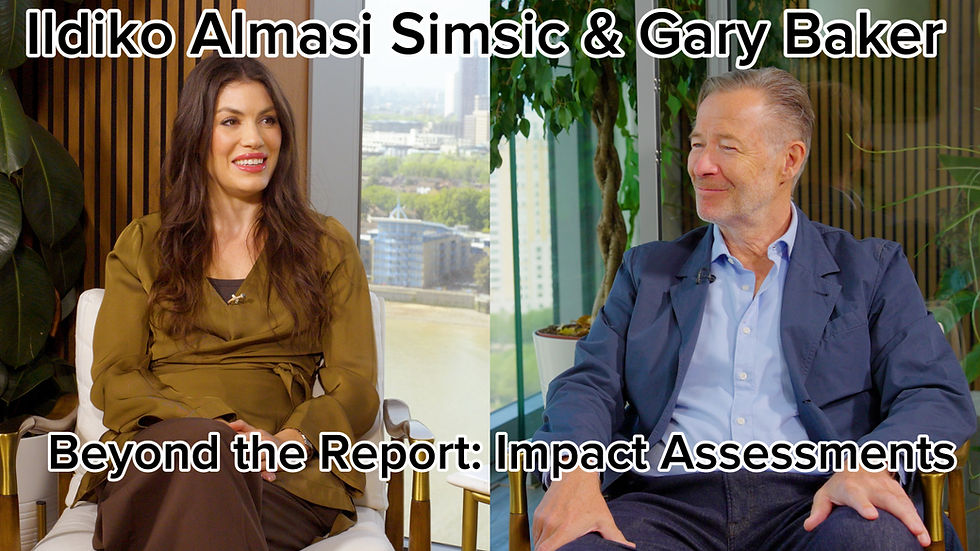
In this episode of the No Nonsense Sustainability Podcast, host Ildiko Almasi Simsic welcomes back Paul Lawrence, a senior social advisor, to discuss the intricacies of stakeholder engagement. The conversation delves into the practical aspects of engaging stakeholders beyond the typical corporate checkbox, focusing on real-world applications and challenges.
Paul Lawrence shares his insights on the importance of listening and responding to stakeholders, emphasizing that engagement is not just about ticking boxes but about meaningful communication. The discussion highlights the complexities of defining stakeholder groups and the common pitfalls companies face in their engagement strategies, such as relying too heavily on public relations channels.
The episode concludes with practical advice on how companies can improve their stakeholder engagement by being proactive, transparent, and responsive. Paul stresses the need for companies to genuinely listen to feedback and adapt their communication strategies to ensure stakeholders feel heard and valued.
Highlights
Paul Lawrence emphasizes listening as a key component of stakeholder engagement.
Stakeholder engagement is often misunderstood and misapplied in business contexts.
Companies should focus on the quality of information shared with stakeholders.
Engagement strategies need to be tailored to specific stakeholder groups.
Proactive communication can prevent misunderstandings and build trust.
Key takeaways
1. Stakeholder engagement requires active listening and responsive communication.
2. Misunderstandings arise when companies use engagement as a checkbox exercise.
3. Effective engagement involves sharing relevant information with the right stakeholders.
4. Proactive outreach helps identify and address stakeholder concerns early.
5. Companies should strive for transparency and honesty in their communications.
Timestamped breakdown
0:09 — Introduction to Stakeholder Engagement: Ildiko Almasi Simsic introduces Paul Lawrence and the topic of stakeholder engagement.
0:50 — Defining Stakeholder Engagement: Paul Lawrence explains stakeholder engagement as listening and responding to stakeholders.
1:34 — Challenges in Engagement Terminology: Discussion on the varying interpretations of 'stakeholder engagement' across industries.
3:17 — Quality of Engagement: Exploration of how engagement is more than just public hearings or reports.
4:44 — Engagement in Practice: Paul shares examples of engagement strategies in different business contexts.
7:19 — Importance of Communication Plans: Discussion on the need for detailed communication plans for effective engagement.
10:27 — Skills for Effective Engagement: Paul outlines the skills necessary for successful stakeholder engagement.
12:35 — Proactive Communication Strategies: The importance of proactive communication in stakeholder engagement.
25:03 — Scoping as a Tool for Engagement: Paul discusses the role of scoping in understanding stakeholder concerns.
31:28 — Effective Engagement Techniques: Exploration of techniques for engaging stakeholders effectively.
Edited transcript
Welcome back to the known nonsense sustainability podcast. Today we're covering one of my major pet peeves, stakeholder engagement. My returning guest is Paul Lawrence, senior social advisor. Welcome to the show, Paul.
Thanks for having me back, Eldico. Welcome back.
Yes. As a reminder about the house rules, I have Bob the buzzer. Um, we will buzz each other for the buzzwords as always. You can buzz yourself.
Have you buzzed yourself?
Yes, many times. Many many times.
Okay. So, now let's start with the 60 seconds. What is stakeholder engagement?
Have we did we answer this last time? I can't remember.
It was communities. It was the communities.
I'm a little bit worried I might repeat things I said before. So, so what is stakeholder engagement?
Yes.
I think it's hard to define, but I think that it is listening and making sure that you are hearing and responding to people who may have questions about what you're doing. So, I think it's listening.
Okay. No, that's that's a good answer. I'm surprised I didn't have to buzz you.
You didn't have to buzz me. Well, I as you know, I'm a big believer in the in the concept of the podcast, but I I think it's listening. I I was having a conversation with someone this morning though who was asking me about engagement and and I said one of the biggest challenges is that it's a term that everybody hears, uses, and understands. But the problem is is that when they use it, they often mean vastly different things. So, we're using the same words, but we're not meaning the same thing. So I think it's I like to use the word listening and and and making sure that people feel heard which is actually something tangible you can understand.
Yeah. And this relates to our previous conversations about who the community is and how you how you engage with them in this context. I would also add that stakeholders whoever they are
wait what did you just buzz
stakeholders. Oh,
this is not like a uniform group. We're talking about in a in a business context, we're talking about very different groups of people. We're talking about your own management, your own board. We're talking about people outside your company. We're talking about other departments within your company. It we're we're talking about a very very broad topic. I agree with that, but I wouldn't buzz the word stakeholder because I think for me that, you know, who has a stake, who has an interest in whatever it is that you're doing, I think is is a clear definition. What I think is is problematic is when, you know, people use it and they they don't necessarily define it. But I think that's the the key element that that I try to do is to say, okay, I'm telling you who I think is there, who is a stakeholder, who may be interested, and then you invite other people to sort of show an interest. And that broadly is the word stakeholder.
And I guess the more misunderstood part of this whole phrase is the engagement, right? Because for some people it's the publication of the annual sustainability report. For some people it's the two public hearings so you get your permits and your project can get going. But it's really about the the quality of the information you share, the decision of what you share and with what subgroup.
Yes. Uh indeed. And I I gave an example again in the conversation this morning where I was talking about, you know, everybody engages. So there can be some engagement that isn't relevant to what it is that I do. So for example, I was talking about a a a project I'd worked on that was a big salt producer. Uh, and they had a big commercial website. They sell salt. I mean, as silly as that sounds, I was at the working on the expansion of the the salt production, the mining of salt, the processing of salt. And what was difficult to say is I kept saying, you need to have a stakeholder engagement process for our project. And they point you to the website and say, see, we're engaging. And I'm like, well, that's a different at, you know what I'm saying? You know what I'm saying? They were confused because they're saying, "Of course, of course, I already engage with my stakeholders, my the people that buy my products and and my suppliers, customers, right? Customers and suppliers."
Yeah, that's engagement. But I said, "Actually, what I'm talking about and coming from from uh project or or development finance." Yes. But what I want to know is in your project where you're going to expand your soul production and your your processing, who's affected? Are you taking land? you know, how are people learning about any sort of environmental issues? That that's what I mean when I'm talking about it, but as you can see, it's a it was a great example because they're confused initially when I, you know, say, "Well, the website's not good enough or
Yeah. We've had so many clients that came to us and said, "Yeah, our stakeholders are our customers and we have the product information on their website." Yeah. But in fact we we meant completely different things and they focused on this external people far removed from the operations. And in our job we focus on the people who live around their production facilities or who are along the transportation corridor who are like disturbed by the noise, the discharge, the what whatever it is related to the operation, right? And then the the engagement is very different like you have to communicate when you're doing things what you're doing and also respond to any sort of concerns around these these issues listening and responding. That's right.
This is a short episode. But the dilemma the dilemma on this topic though is that I as as obvious we're sitting here and laughing. As simple as that sounds and as and as obvious as as what I think what I'm saying is, it's amazing how often you use it, talk about it, and then it's just it's just not being being done. This is the dilemma. So, people are, "Oh, of course I know what you they almost get irritated with you for for telling them that because they say, oh, I I knew that. I did that." But the results are not not what you what you are.
Yeah. Because the reality is they have a communications team. they have a PR team and they think they are engaging through those channels. But that's not what we mean. So let's let's put it into context. What we mean is we want our clients to set out a plan where they detail what kind of information will be shared how often and with which subgroups of the communities around the operations or who maybe nos as well who are interested in the project right that's what we mean so for us stakeholder engagement strictly speaking communicating environmental social impact acts of the project and main construction or operations milestones.
Yeah. No, that's right. And I I mean I guess the the thing that I struggle with is like why why has this been talked about for so long? Why are there industries that not industries but but associations that sort of talk about public participation? Why is it still so difficult to to understand? So, I don't know if you have an answer to that question, but it but it seems like it should be an obvious part of doing business is to be have a responsive group of of of people who can respond to whatever whatever industry you're in, but it doesn't seem to be to be done consistently.
Not really. And then people don't understand what you're saying. Like, that's that's my my main issue with it. Everybody thinks it's uh it's common sense and they share things and they you know they put it on the websites, they go out and talk to the pe the people whoever they are but it's not I don't know all I know is for us we're consistently having trainings to be better at it. It's uh like a sub subtopic on its own and there are people specialized in it who spend months and years of learning about how to do it right. But I guess the I guess we can't really understand how to do it well if we don't understand how to do it like in a bad way. So, some of the bad examples we've seen on some of our joint projects relate to inadequate information being communicated or being hidden somewhere where people didn't have access to it.
What's like the worst thing that you've seen in the last few months?
I I I not sure I want to get into that. No, I I think some the the worst thing I can't say, but I but I think some the the the problem with it is that it sometimes is persuasive. I'm again having a little bit of a a panic that I may have talked about this last time, but but you know, the the concept of objective listening and responding, I think, is different than what a lot of businesses think of, which is I want to persuade you that my product or my my project or my industry is good. And therefore, they're they're they're not sitting here trying to tell you what's good and bad about their project and getting your comment. They're trying to to to sell you on it. And and I think a lot of people approach it that way. The reason that's problematic is is because if you're always trying to persuade people, then people get cynical. They start to that they they question your motives. Like, you're not trying to give me the the the information about how the increase of your salt factory is going to impact me. You're just trying to tell me that everything's okay and that if I have a question, I can call you. But really, you're not being honest with me about what what you're managing. And I I have to say that if you asked every client, are you are you are you happy to communicate objectively and and give objective responses, they might say yes, but it's one thing to say that and then and then do it. And and what we're convinced of, which I don't think everybody is convinced of, is that there's actually a commercial or or a or a financial benefit to doing that. And I I I think that that I would say it's not widely shared. So,
but what are the skills that you need to understand stakeholder engagement? Like if it's a company listening and they're like they feel called out, what is it that they can do?
What is the skills you need? I think well it depend I would go back to what I was just saying a minute ago. I think it depends on your approach. If you if you're trying to listen and and so if somebody's complaining about something that you do, then you would respond and give them an honest answer and reassure them that what they were concerned about or what they were worried about is not something that that that is a problem or demonstrate to them that that that you fixed the problem. But if you are just trying to sort of put it off or evade the question, then then it's a different it's a different skill almost if you if you know what I'm saying. The first bit, the bit that I do or the bit that I would encourage uh or I encourage the people I work with to do is, you know, you're going to be better in the long run if you are objective, if you talk about your mistakes, and and if you listen really carefully, understand their problem, give them an answer, and then say, "Did that did that resolve your problem?" I mean, that's that's sort of how you close a a grievance or or or or a complaint, right? You say, "Are you satisfied with with the information you got?" no matter what the topic is. And I think that that is time consuming. You you'd like to think that that will resolve the problem. The skill, going back to the question you just asked me, the skill is is really being attentive to detail and and and and not making assumptions and, you know, checking the checking the information you're getting and and continuing to to to listen and and and pay attention to what people say.
But how do you know what to communicate?
What to communicate? Let's return to your assault factory people. Maybe they have the best intentions. How do they know what's meaningful information to these people?
I'm going to be really repetitive. You have to listen and and then ask them. So, a lot of times people say, "Why would you disclose that information or or even even you know people will get information, they don't read it." Have you ever, you know, found anybody who enjoys reading a a permitting document or a big
Not really.
Oh, like things come through your door and they're talking about a new real estate development next door. You know, you you may not read it unless it directly impacts you, right?
But sometimes sometimes they have to proactively put information out before they can even listen. How do they know what to put in that information package? the filter and the skill that I always tell people is try to try to think about the person who lives there and doesn't have any technical knowledge or you know a relative and and try to explain it to them like what is it that you think they need to know and I I think you you start with that you you know better to start with something small and then and then build it but you know you ask people what they want to know or you give them a little bit of information and see what questions that they ask or you print something, you put it on your website and see if anybody responds. If nobody responds, then you probably aren't giving them information either the in content or in a format that they can consume, right? If nobody's responding, if you don't get any comments, then you you either haven't communicated it very clearly or you haven't given them something they're interested in or given it to them in a in a way they understand. Right?
So, no news is not always good news. It's very hard for people to understand it. But when you What's the worst thing that happens? The worst thing that happens is when you have a large project that you know has a lot of public interest, you've gone through a disclosure period, a formal disclosure period.
Form of disclosure.
Form of disclosure. Um, great. That's a good one. when you do a a a large project or you know even a small one sometimes you have to go through a period whereby you have a a a period of public uh p public comments. So where you would you'll announce that something's available and and and wait for for feedback. Right? So that could be complemented by additional meetings or or letters or whatever whatever is appropriate for the context. And if you go through that process that that period and nobody comments, my question always is, well, can you explain to me how you you provided the information to people? In other words, what did you do so that it wasn't something that had to pull people onto a website, but you actually went out and provided flyers or you put up a a what do you call those codes? The I just saw
the QR codes.
The QR code. Yeah, I just saw one on the on the way here on the tube. You know, there's a big construction site in front of our our tube. there's a QR code like it's telling it's it's pulling you in to get that information. But if nobody's using that then then you probably need to do to do other things.
But is that part of our social conditioning? I know last time we talked about your personal experience and since then I've had my personal experience of being affected. My my office is near a hotel construction and before that it was largely internal. So we had the noise and the trucks but it was more manageable. And now that it's almost done, they have workers coming in and out at their lunch break and they're smoking outside our windows and they're leaving their rubbish there. And it's really eyeopening when the expert is in the affected person category because I did have to check myself whether I'm really going to complain. Like for me it was a moral dilemma. Like I understood
you had to check yourself as to whether you'd complain or not. Yeah. Whether it's like uh legitimate, you know, like I knew that there's a site manager. I knew that there's probably a mechanism where they have to listen to me and like put it somewhere. I tried to go online and like go down the anonymous route so I don't have to show up in person. Yeah.
Yeah.
There was nothing online. So I eventually had to be fed up enough that I walk into the construction site. Look for the manager. Yeah. Everyone watching like what what do you want to do? And I I had to say I want to put in a complaint and then I'm standing there waiting for the guy and everyone's watching like oh the yeah the lady that wants to complain and even then you know I explained the situation I gathered the evidence. It was not recorded anywhere. I didn't get a phone number and eventually the issue came back. So now again I'm like what do I do and that's when you know we we were not informed when things are happening how
told you how how long it would be when once you're complaining
nobody nobody even told us that we can just go there and complain.
Yeah.
No I I mean I think I think it's it's uncomfortable when you're in that situation. It's very uncomfortable.
It is uncomfortable. So, so, so that and I know you went in and you ended up not putting in a complaint.
Yeah.
Wait, I did.
No, last uh the last episode when you told me you went through the process to find a person and you ended up not trusting the process.
Well, I didn't trust the process. I I did I did put in a It wasn't a complaint per se. It was a question. This is this is a little bit of of a difference. I think for me the takeaway of what you're saying though that's really interesting and it is often uh recommended but but rarely done is that you can say yes I have a procedure yes I've invited you to participate but particularly in some of the countries that that I work in where listening to people and complaining and giving feedback is not not the the norm people aren't comfortable doing it is it is an uncomfortable thing like like it is
it's an uncomfortable thing to It's not the norm. And in some cultures, it's it's actually seen as to be quite a negative thing. Like you only complain when it when it really is when it really is, you know, serious. Like it's not as though you're saying, "Hey, let's sit down and talk about the good and bad of of whatever it is that I project I'm doing." That's not that's not always the cultural norm. So So the job going back to Sorry, trying to remember your question as I lose my train of thought. Uh the job of people is to make people feel comfortable and and how many times have I have I have I said, you know, the the the email info@ whatever company.com is not a really welcoming email address. If you don't have a name, you just have a position or like the general director who you know you're never going to speak to, people don't feel really great. I did a project in Kyrgyzstan where I said put their names, put your photo, like show show them who are the people who are going to be fielding your questions because you you need to make people feel comfortable. I don't know whether that was appropriate or not.
Well, no one wants to be the complaints person. No.
Yeah. Yeah. Yeah. No, the idea was the idea was to say this is my name, this is who I am, this is my position, here's my email address and my telephone number, call me. You know, it's it's instead of having just a generic because because it is very difficult to go into that that world of they're going to have my they're going to have my contact information.
Yeah. Exactly.
I really want to draw attention to myself. Is it that serious?
You feel it. You feel how it is.
Exactly. And even if you go into the office and you have this person with a name and you know you kind of suspect that they're doing something about it like on the dayto-day the change is not immediate. So, I still had the workers show up and I had to look at them. They had to look at me. They knew exactly I'm the lady that complained and it was just like really uncomfortable and I
Did you get what you wanted in the end?
Oh, yeah.
Oh, you did?
Yeah.
Or an effective be but mostly because I knew that they have to do something. Yeah.
So, if I go back and I escalate and I have the evidence, I knew that they have to do something. But even then it it just some of the things that we put in project documents just seemed so ridiculous especially in these contexts where culturally you're not complaining or you can't say things or you know we had those projects in super remote locations where it's a village 300 people and you have 50 workers come in and even if there's a resolution of some sort they still have to coexist Mhm. in that village.
Yeah. Yeah. Yeah. I mean, this is Yeah. I I I think that the takeaway for me or what we're talking about is that it can be really uncomfortable and and from from from what we're saying I I'm I'm just reminded again of this idea of of the belief that you think being open and honest and objective in the way you communicate is is is adding value to whatever it is you're doing versus you know what we may not be working really well so we probably better manage this or do the public public relations or PR management as opposed you know you're almost how how does some people phrase it? Uh, you know, you're engaging to kind of keep problems away from the business or keep it keep them from being known as opposed to using engagement as a as a management process to say, "Hey, you know what? When people feel listened to and you you you resolve their questions before they they amplify and and get bigger, you know, it's it's better for us." But I it's a leap of faith because I don't I don't I don't think every everybody everybody agrees with that. So
yeah, but then returning to my earlier question, how do these companies know what to share? So let let's take an example uh existing facility, whatever manufacturing plant and they're building another site. So they have something that already exists where they probably don't share a lot. They might have some ongoing complaints. We've seen it on our projects where, you know, the workers with the truck drivers with the noise or something discharge and now they're having the new project.
I think it's more common sense that they they're going to say, "Okay, we have this new project. This is what we're going to do. This is the timelines, etc." But what about the existing operations?
You have to share what people ask you about. So you, in other words, I I I don't think you can determine that by sitting in an office or reading a long document and thinking alone. I mean, I think you you you you do have to to do a little bit of an analytical work, but I think you have to just ask people. I think you have to, you know, wait and hear what kind of questions you get and and then adjust information um a as it comes in. I I find this process I see you've got your book here, Social Impact Assessment, but that's not a buzz word, is it? Hey, I haven't been buzzed. I haven't been buzzed in a long time. Buzz buzzing. Okay. Does that mean I'm not using too many butts?
I think that within an an environmental and social impact assessment process, which is what what I work on a lot in in in in some of my work, a really interesting conversation is to talk to an environmental specialist or somebody who's done a really technical element of of a project. and you you know what they think might be interesting to their work and to the overall project is not what a a neighbor who is going to see this you know they may be interested in jobs or the the tax reviews do you know what I'm saying so it's like even even that can be you know you you've got to go out and ask because if I asked a water specialist what was interesting about all the work they did on you know a mining project in some country they're probably going to give you some really technical information, but how many people who live next to a big mine are going to want to know about the water balance or you know the or at least know about it in the or be interested in reading about it in a way that that specialist would want to share it.
And what about being proactive? Because very often when we say stakeholder engagement, it kind of implies a certain level of proactive outreach. Yeah.
Before you even get the questions. The biggest the biggest lesson I Sorry, you asked me a few minutes ago and I didn't didn't uh reveal any dirty laundry, but I think one of the things I've learned again in the last few weeks is is um I'm going to buzz myself in advance um for for the the the importance of doing what we call scoping. So, so a scoping process is when you are just getting started, you know, you you you haven't done any construction. There's nobody on site. there's nobody who's who's doing the project, but you you you scope it in in a sense of you you go and you give people preliminary information, a preliminary idea of what you're going to do. You talk to local government officials, you talk to because some community associations, you maybe talk to a sample of neighbors and you sort of tell them the initial ideas. What questions they ask you? Right? So, I'm really Oh, you're not going to do that here. I'm really worried about traffic or I'm really worried about what might happen to the water or the noise, you know? So you you you you use that information in the scoping phase to then inform not only what you communicate but also where you really need to focus your attention in the rest of of impact analysis or or or studying. So in and that it is a standard process in the impact assessment process. I think that when we talk about scoping though what we really mean is just give people a little bit of information and see what they ask you. It's practical, right? It just it just it's better planning instead of instead of doing a lot of work and then giving them the whole big package. Give them a little bit of information after you've done just a little bit of work and and see what they say.
Yeah. No, that's fair. And I know that this this approach of being more proactive is mainly coming from our work in the impact assessment sphere where you have to disclose things. You have to when was Sorry, I'm waiting for you to finish. But you have to disclose things and you have to share these impacts. But I feel like with with stakeholder engagement being so like popular in the sustainability discourse. Yeah, I I buzz myself for this. For companies who are not working on a project basis, who are just operational facilities, service providers, what would this mean for them?
What would scoping mean? No, like stakeholder engagement. How would they scope? How would they get the questions if for many years they've operated without asking?
You mean an ex? Yeah. Uh good good question. I don't think it's ever too late to start ask get asking people for feedback. That would be my my my first response. And I was going to ask you a question. and all the projects that you've done, when was the last time that you saw one that did a formal scoping report and a disclosure and invited people to comment on a scoping report?
I can't remember.
You can't remember because these scoping reports are usually done like it's um they usually don't have that mandate. Yeah. To organize these meetings. It's not a strict requirement, right? No, it says you need to do this and when when it when in a project.
So the reality is somebody a group of people go out there. They gather the information. They may or may not talk to people they meet who happen to be at home or around the site that day and then they write up the report. So everything that's more organized communication and like with more purpose that happens when the impact assessment begins.
Yeah. I think I got super lucky in in in some of my work and that the first big project I ever worked on was a was a mine in in a subsaran African country and I and I worked with a group of people. We had a really formal scoping process where somebody did a whole review of the legislation and and and we did a draft and we shared it with the government and we did a simple version and talked about it with some of the local local authorities. I it it worked really well and I was I was really pleased with it. But then as I kept working I realized that it was the it was the exception and not not really the rule or the or the norm. But what was useful was sort of seeing how it helped it helped sort of improve you know the legislative review for for the project. It helped improve the communication with the government but doesn't get done. I I I don't know should there be should there be a a formal rule about it?
Is it in you know a lot about um EU legislation right? Is it in is it in there? Not really. Even even their formal process is two public hearings whatever that is. You can't
I was going to explain the word public hearing is but the public hearing is they organize a meeting. Yeah. They put up uh the documents on the website. People either come and read it or not. And they have to do it twice. Ideally the the theory behind it. First time you have this draft report and the last one ideally incorporates your feedback or comments. But sometimes nobody comments because it it it also comes back you know to the people on some projects. You can ask them to come and participate in these public meetings and the reality of this because that's important for people to understand. reality is you have the the city hall or you have a empty school uh gym room or sports hall and you invite people from the village they come they all know each other they sit there and you're you're explaining what the project is and you're like oh do you have any questions and then somebody might put up their hand but they might not because of the social pressure
sure no I I I mean I think it I think it would be helpful Do I mean the things I'm taking away from this conversation are the unspoken challenge of trying to get people to comment like inviting inviting comment I think is is something that's often not not talked about enough and I think that the other one is the the the what would be useful is the formalization of what we call scoping but what we really mean is you know before you do a lot of work or a lot of studies or or or a lot of thinking about what you need to engage engage on, give them a little bit of information and see what you get back. You know, a preliminary process whereby you take the temperature of the people who are, you know, going to be affected or are being affected, but you've never asked to kind of get a sense of what what what to do next.
Okay. Let's say a company puts up a poster in a village inviting comments. Is that real or is that greenwash?
Is that real? Of course. Is that efficient? Wh why uh why would it be is it efficient? I I would say it depends. It depends on where people where people get information. If if people don't get their information from the community announcement board, then no, it's not not not effective. But sending sending your we have this uh community leazison officer. It's the person representing the company who's going into the communities to discuss, get their feedback, share the information. Is that a good way of talking to these people? Yes, it is. Uh but I but I think and I just wrote this in an email a couple days ago where somebody said, "Well, the the company doesn't have a community le as an officer and I said instead of thinking about it as a person, think about it as a as a function as as a function that somebody is going to do. In some projects, it could be 15 people who do work all day every day to go and meet people or share information and listen. Or it could be somebody that's already there, but you have to designate them to be the person who's going to now complete that function in the company like now they're the person to call when there's a question. So, it just it helps to think about it because when we use the you need a CLO or how many CLOs's do you need or what's the job description of a CLO? you just simplify it and say, "I don't know what's appropriate to make sure that the people who are impacted by your business are are able to get information and you you're listening to them. You tell me what you need for that." Like, is it a team of 15 or is it just, you know, an HR manager or or another person in your company who can who can fulfill that role given that it's relatively straightforward and and not complex?
But is it straightforward and not complex? Imagine you're this HR officer. spent all your life processing employment contracts, approving holidays, and all of a sudden you get an email like every 2 days you need to go out to these villages and just hang out.
Absolutely. And I I had I had an argument recently where where where somebody was was saying, "Oh, we we we needed to downsize a little bit so those people that were going to lose their jobs, maybe they could be the I it's a function. It it does have a skill though and and the skill is to to be a good communicator to be good at listening and and to not you know really get get uh repeat yourself a lot get you know not get impatient with people. So there there are job qualities but I think you're right you can't just assign it to somebody and assume they're going to do it when my point in saying that it could be the HR manager is to say that might be an appropriate person to do it if if the complexity is not that great. If you've got a, you know, a mining project or a big infrastructure project and the community is furious about it, I wouldn't tell the HR manager who doesn't people to go do it, you know, then you might need somebody with a little bit more experience in conflict. The other thing I think that's super important is I was thinking about this again, uh, is somebody who who's worked cross-culturally. I think we I think we touched on this last time, but just the the ability to kind of know what it's like to be getting information maybe in a language you don't speak or to have people who don't all speak the the main language that you're presenting the information is. You really need to have a I think a an awareness of that when you when you design whatever event or flyer or letter you you do, you know. So, in order to make stakeholder engagement less buzzworthy and more meaningful, what would you say are the three main takeaways that anyone should remember?
Oh, can we only just leave it to three? Um, you can make it four. No, I I I I I don't I'm trying not my my challenge is not to repeat myself. The three things are demonstrate to me that you've given information that's appropriate. Demonstrate to me that you listened and then demonstrate to me that you you've responded and sorry let me I can make it for demonstrate to me that the people were satisfied with your answer.
Is that a requirement?
Yes. So the IFC, the International Finance Corporation that you you you used to work for, um uh which is a part of the World Bank Group, um you used to have they use the word free prior and informed in the way that they talked about the the the premise to get engagement. So free people are freely able to come and and get information. I would go back. I'd say demonstrate that to me. G demonstrate that you gave them that information. Prior means you've given that information prior to to them being affected. Right? So you're giving them you're giving them also you're giving them information before they come. So in other words, you don't you don't have a big complex document and invite people into a room and then say does anybody have any questions about this? You've given it to them before so they have time to digest it. Um uh free, prior, and informed. So informed is that is that it it's relevant, right? It's relevant information.
Yeah. But then you're saying they have to be satisfied and sometimes that's unrealistic.
That's right. That's right. and and not everybody not everybody is satisfied. But if that's the case, I would say, well, some people were satisfied and some people weren't. My question would then be, well, those people who who weren't satisfied with your answer, why not? And and that's where that's where it becomes a qualitative judgment on are is that is that question being reasonable? Maybe they're they're not being uh maybe the person asking the question is not reasonable. Maybe they have a different motivation, but you're you're getting to the point where you say, "Were they satisfied?" If the answer is no, then then you have to follow on and ask why, right?
Yeah.
I think one topic I'd love to talk to you at some point, I don't know if I'll ever be invited back on the podcast, but is when third time you get the t-shirt. Yeah. Yeah. The friend of the pod t-shirt. the the thing that I think and I'm experiencing a little bit in my work now is that what happens when the there's the the the person being impacted or the the NGO or is not really working in good faith either because they can cause a lot of problems for projects you know they can they cannot engage in good faith as well and and what what what is the responsibility of somebody who works in the field of engagement to listen to say you know what I've listened to you enough I've heard you. I answered your question last week and you're asking the same question or a slightly different question this week and we already we already talked to you. It's it's a it's a it's a also another element of the work we don't talk about very much.


Comments