


Environmental Permitting in Nigeria with Dr. Adegboyega Lawal
Watch the episode
Summary
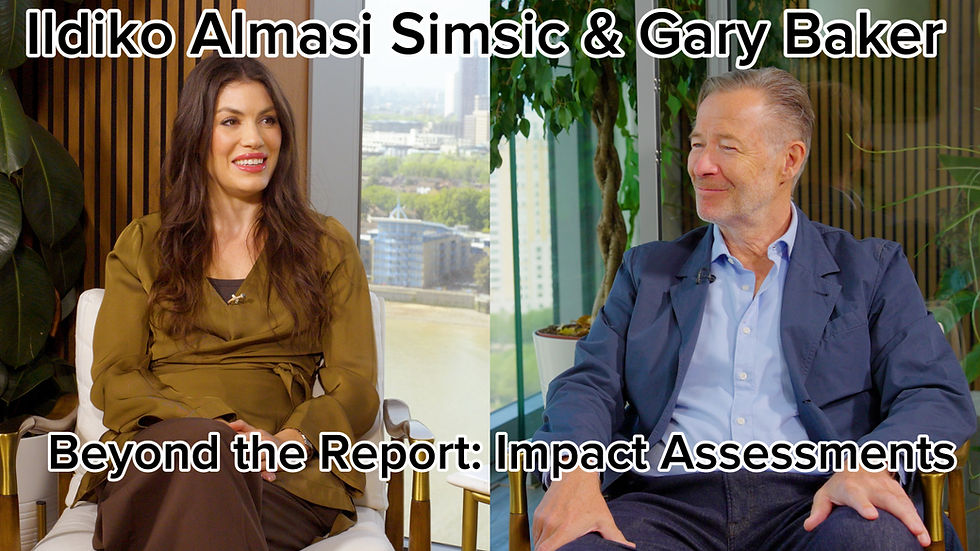
In this episode of The No Nonsense Sustainability Podcast, host Ildiko Almasi Simsic welcomes Dr. Adegboyega Lawal from Nigeria's Federal Ministry. Dr. Lawal shares insights into his role overseeing environmental permitting and compliance in Nigeria.
The conversation delves into the complexities of environmental permitting in a developing country, addressing challenges like aligning local laws with international standards and the importance of public consultations. Dr. Lawal also discusses the use of AI to preserve institutional knowledge and improve efficiency in processing environmental reports.
Dr. Lawal emphasizes the importance of adapting to international standards and leveraging technology to enhance environmental governance. The episode highlights the critical role of environmental permitting in shaping Nigeria's future infrastructure while protecting its ecosystem.
Highlights
Dr. Lawal oversees environmental permitting in Nigeria's Federal Ministry.
Environmental permitting involves regulating and providing permits for proposed projects.
Public consultations are crucial for assessing environmental impact reports.
AI is used to preserve institutional knowledge and improve report processing.
International standards influence local environmental governance in Nigeria.
Complex reports require expertise in various environmental and social issues.
Environmental permitting has long-term impacts on Nigeria's infrastructure and ecosystem.
Key takeaways
1. Environmental permitting in Nigeria involves complex processes to ensure compliance with both local and international standards.
2. Public consultations and expert reviews are essential for thorough environmental impact assessments.
3. AI technology helps preserve expertise and improve efficiency in processing environmental reports.
4. Adapting to international standards is crucial for Nigeria's environmental governance and infrastructure development.
Timestamped breakdown
0:01 — Introduction to the Podcast: Host Ildiko Almasi Simsic introduces the podcast and its focus on real sustainability issues.
0:44 — Guest Introduction: Dr. Adegboyega Lawal is introduced as an expert in environmental permitting in Nigeria.
1:27 — Environmental Permitting Process: Dr. Lawal explains the basic process of environmental permitting in Nigeria.
2:14 — Daily Responsibilities: Dr. Lawal describes his daily tasks in overseeing environmental assessments.
6:34 — Public Consultations: The importance of public consultations in the permitting process is discussed.
8:38 — Expert Reviews: Dr. Lawal explains the role of expert reviews in environmental assessments.
21:09 — International Standards: The impact of international standards on local environmental governance is explored.
32:18 — AI and Technology: Dr. Lawal discusses the use of AI to enhance environmental permitting processes.
Edited transcript
Welcome back to the No Nonsense Sustainability Podcast. I'm Ildiko Almasi Simsic. This show isn't about saving the planet with corporate slogans or glossy brochures. Here we're talking about real infrastructure, real communities, and the future we're building together with the people shaping that future and the critics testing it. No jargon, just real talk.
Have you ever wondered what it takes to work for your government permitting mega projects? What if it's in a developing country where the stakes are high, the investors are international, and the lender standards are quite stringent? Joining me today is Dr. Adegboyega Lawal from the Federal Ministry of Nigeria. Ad holds a PhD in impact assessment and has over a decade of experience delivering incredible mega projects in Nigeria. Welcome to the show, Ad.
Thank you very much. It's a pleasure to be on your show. Thank you very much.
You're not new to Bob as you've met Bob in Quebec. So this time, how about you explain the environmental assessment process in 60 seconds with no buzzwords? Are you ready?
All right, I am ready. Yeah.
Okay, let's go.
Okay. Environmental permitting. It's a process whereby government officials regulate and provide environmental permits for proposed projects or developers.
Okay, so the process starts from the developer submitting the document, but that's not how it ends. Can you walk us through the different stages and what is your day-to-day like in the office?
Okay. So my day today is very busy. As we know, Nigeria is a developing country, and we have a whole lot of increased development gaps in terms of infrastructural development, mining, and agriculture almost daily. My department of environmental assessments is like the gatehouse for projects that need environmental permits, specifically the environmental impact assessment. So we receive applications, proposals, and requests for approvals on a daily basis, and we have a process in which these applications go through before the approval is granted.
Each day we are either continuing the processing of a particular application, concluding it, doing a technical review, or an in-house review of a project. We are discussing findings from our site verification or initial site visit or findings from data gathering. We have different units that consider different things, but for me, my unit is the evaluation and analysis. So what I do mostly is this big report comes to my desk, and I give my review of the report with respect to our guidelines, laws, and also other international protocols that we are signed into.
So mostly I do evaluation and analysis, bringing out gaps on areas of improvement within environmental impact assessment reports. Basically, it's either I'm concluding a review and presenting my comment, checking if a comment that I've been presented earlier has been well addressed, or proposing a meeting with the developer or consultant to discuss some gray areas relating to the project and their applications. That's a brief of how my day goes. If I'm at the office or some days like this that I'm not in the office, I'm on site. I'm either following up to confirm some information that was provided to us and also to corroborate issues and give guidance on field activities.
Yeah, these impact assessment reports are quite long, right? How many a day lands on your desk on average?
Yeah, for the past, I was taking inventory for the past over 13 years or so now. At least in a day, let me make it a week. In a week, I receive at least three new reports.
Oh wow.
Sometimes true, but I can assure you that I receive not less than three per week assigned to me because we have over 200 staff, but within our unit, we are close to 20 staff in the unit. So it goes, and I'm in the infrastructure unit. So I receive more of infrastructural related projects. Some of my colleagues receive oil and gas, some receive mining, some receive agricultural projects. So let's say three per week. The first step we do when I receive such is to first of all subject it to public review. So we tend to advertise it on the radio, newspaper, put it on our website so that the public can also make comments on the report before we now subject it to either in-house review, public review, or expert review based on the category in which that project has been categorized even from the initial environmental evaluation.
When you receive these reports, do you give them a check before it goes to public consultations? Because I assume that a lot of the reports have basic human error flaws like an annex is missing or an appendix is not sent or the cover page is not formatted adequately. What percent of reports do you send back before it even gets to that consultation stage?
Exactly. That is the part of the job I do in evaluating and analyzing. So once this report comes, we do a basic sweep or check through. Most times I look at a table of content and I look at the structure of the report to see if it at least has the basic information that we are looking out for. Once this is there, we can now recommend that this can go to the public. But in cases whereby we see that this report is largely deficient, we send it back to the consultant with our basic comment that they should go address it and resend before we can now start the review process in earnest. So we do look at these areas, and we have turned back several reports and we have even stopped some reports from going to our online website so as to reduce how far the report can go. So it's part of what we do.
When you disclose the report, you hold the public hearings. Are you participating in those? Is the report also disclosed online? Is it you who's analyzing those comments? How should we imagine this process?
Yeah. So each report comes follows different category. We have the category 1, category 2, category 3 project. So for a category one project that is project that are located in environmentally sensitive areas or project that are having potential for high social risk will do a full public review. In this public review, we invite the state ministry of environment because Nigeria is divided into 36 states so the state has their own ministry of environment. We invite the state ministry of environment, the local government, civil society organizations, and NGOs. Then we'll also get across with different experts. We invite an ecology expert, an engineering expert if the project is engineering based, a waste management expert, climate change expert, and we'll call the community also to have like a co-presentation like a town hall meeting.
So we usually don't do that in the state where the project is domiciled because we in the federal work at the middle. So but project comes from different states. So we have to go to the states in which the project is domiciled and we have a co-presentation. So just like a court of law setting where we have sitting in front the panel is composed sometimes we have like eight members of those panel the ministry is represented by just one person the different experts from universities and regulators from the state then we have the proponent of the project and their consultant then I from the ministry will sit as secretariat to take note of the questions raised, the response made, and the recommendations from the panel which will form the condition either for approval of the ESI or disapproval of the ESI.
So we have this area whereby even the communities will sit and face. So the consultant and the proponent will make a presentation of the EIS and the findings, the impact, the mitigation, the management plan. Then the experts will ask questions relating to each area of interest because we have provided a report to them beforehand. So they want to get some additional information.
Ah okay. So they're there to ask questions from you, not to reply based on the on behalf of the project.
No, the experts are to ask questions from the proponent and the consultant.
Okay.
Respect their ESI because we feel that the community might not have enough expertise to speak what they might be the right questions. So these experts are like sitting in for the community for Nigeria as a whole while also will also be asking their own questions because the community are the first line of people that will ask questions. They ask their own questions on how this project will affect them. But the experts are there because we in the ministry might not have all the level of expertise and we need help from consultant and from the academia because they have more.
Yeah. So they bring in this question and most times it's an avenue for us to learn. I learn a lot from the kind of questions the ecology expert asks or the kind of question the waste management experts do ask them. So I take note and maybe in the future also I also add it to my own criteria of asking questions and I learn from what they also ask. So in that scenario we place all the cards on the table and the community.
I think that's very smart because a lot of these reports are very complex. You're dealing with so many topics. There is no way for one person to have in-depth expertise in groundwater management, biodiversity and supply chains at the same time.
Exactly. Exactly. So it gives us a regulator ample time to focus on the laws. Let's see if the limits are being met. If the national limits are being met, if the international limits have been met. So we focus on the regulatory part of it while our experts bring in their expert point of view. Then we'll harmonize all their comments. We harmonize them into a singular comment which we do call the harmonized comment. So this comment is what we will now send to the consultant and proponent for them to go update the draft report and bring up a final report that will address issues and areas that have been brought up. Then we also look at conditions because we don't just give approvals. We have conditions for approval or disapproval. So the panel also recommends that okay you need to have a stakeholders engagement plan that maybe will be quarterly maybe you need to develop a resettlement action plan for this project or you need to have an explosive management plan or some other plans that were not factored into the so these are recommendations that well formed.
Let me give you an example. A case happened while I think some years back with a former director, the governor of one of the states in Nigeria wanted to build a super highway of close to more than 300 m width 300 close to 500 or 700 m width in terms of the width of the road.
Oh wow.
And it's going to be within a highly vegetated area where we have a lot of exotic trees and a lot of exotic trees that are in that area. And it was very dicey for us because this governor is very powerful in terms of government and the government are the one proposing the project. When we saw it we were in a fix. We don't know how to navigate to tell the doctor sir sorry this project you're going to be felling a whole lot of trees that are going to affect the ecosystem of that particular region because that region is one of the most protected regions in Nigeria in terms of biodiversity. We had to find a way to bring in this panel of experts and we brought 21 conditions of approval.
Oh wow, that's a lot.
That particular approval because the presidency was on our neck that no no no this guy needs this job. Why are you holding it back? Please we need development in Nigeria. We want to open up roads and we are government also. So once your principal the president is speaking to you government to lead to something you just have to find a way around it. So what was our saving grace was the 21 conditional approval that we gave and the conditional approval was almost impossible for the public to meet up with. So it was like you gave us approval one hand and you collected it in another hand. So if you go ahead with this you have to go and address these issues and at the end the project was abandoned and it was not followed through it and the environment won at the end and the environment was at the end. So that is one scenario case in which condition of approval really saved our jobs and saved us from the international backlash because a whole lot of NGOs were interested in that project and was writing to us to see what is happening. You can look it up just look up Nigeria superhighway project you will see how that I think I've heard about it.
So in general when you approve you set the conditions. How long after that do you monitor? Do you only monitor during the construction phase or are there specific industries or types of projects where you also monitor during the operations phase?
Yeah. So because we have environmental social management plan that is part of the ESIA which covers all phases of the project the pre-construction the construction the operation and even the commissioning as some project might require we have a unit also in the ministry called impact mitigation monitoring IMM. So what they do in that unit is to monitor project in their construction and phase. So once the project is already going to construction so bring up your management plan all the commitment that was made in terms of what to be done during construction are being checked to see how far the proponent are complying with them. And in most cases we have seen cases whereby we are not satisfied we'll come back again we can do the same monitoring in three tanches and when it comes to operation also the we have other teams although it is multi-agency facilitated other agencies like the NZRA also go on monitoring during operation and we have compliance has monitoring also to see if the project complies. So we have different monitoring in place for operation also and some are with the ministry of environment and some are with agencies affiliated with ministry of environment so as to ensure coordination and to ensure that this project goes on and even the state ministry of environment also have their own monitoring plan even in the state that they use to follow up with this project and most And they use the ESIA as a as a peroso as a document reference document to monitor all these projects during operation because the ESI has what to look out for even at operation stage also.
And the monitoring is it annual or do you have different monitoring requirements based on the risks associated with the project?
Yeah, because it's on a project by project basis now. So each project has its monitoring schedule. So each project has its own schedule based on the risk and based on the parameters to be measured. So some parameters require quarterly monitoring such as groundwater for example and other parameters. There are some require daily monitoring. So we do receive quarterly monitoring report from some project like oil and gas project. Now it is it is compelling to them to send us quarterly monitoring report that summarizes their daily monitoring their quarterly monitoring and by and and monthly monitoring. So some projects it is mandated for them to give us quarterly monitoring while some is monthly but I'm very very much aware with receiving quarterly monitoring reports from the oil and gas and from mining industries and the rest of them all so and we have officers that do check the files and know that okay this particular state project is due for monitoring and we mobilize and go to site and see what is in.
Yeah. That's quite fascinating. I know that you also work on projects that are funded by international financial institutions. So that's basically how we met through these networks where you know the lenders come in. So it's not just your local environmental act from 1992 that applies but more stringent international standards. Do you see any difference in processing just the local permitting versus the international because our perception is from you know sitting on the other side is that an international yes SIA for a world bank or an IFC project is always longer more stringent more detailed there's more experts involved and the whole process is just a lot more complex how do you evaluate those reports differently. What are the key lessons that you think should be translated into like your local way of working?
Yeah, this is a very very important and interesting question because for close to some years now my ministry have been bamboozled or mesmerized by the fact that we are not up to par with international laws and standards with respect to the fact that our laws is dated 1992 and since then till now a whole lot of emerging issues have come in and the fact that I also support a world bank finance project working with the operational policies and now transiting to the environmental framework and also with some experience with African development bank and European investment bank and the rest of them all having different levels of requirements that as we said is complicated or complex. The ministry and the Nigeria National Regulations have also been trying to bridge that gap. Although we have been having some challenges with respect to the laws and passing this decrees into something that is an official document that you can easily see. But we based on the fact that we have a whole lot of affiliations and open-ended learning from maybe IA and SCA and other international groups even the World Bank supporting us even in our country. We have been able to leverage on most of these international laws and protocols and guidelines to improve our own system. For example, let me give you an example. Before now, we do not take GRM that is gous mechanisms, sexual exploitation and harassment sea, labor influx. We do not take those concepts very very seriously as that as it should be. But looking at the World Bank project and we'll see that World Bank will dedicate a chapter for GRM, dedicate sections for labor influx, dedicate sections for sexualized exploitation and harassment. And we all think those before we just lump them up as social issues with response migration. Once we start bringing in those GRL, we now start opening our minds to the fact that there are a whole lot of dust that might have been swept under the carpet for a while and is bringing up new understanding and new reasoning, new ways in which we are taking over our project. So it is currently an eye opener and the ministry the department is going through the phase currently in which we are working to improve on what we can manage with respect to the comments that we raise and the guidelines that we give consultants so that we can also appear to be aware of all these emerging issues because we are also informed from the information passing from the journals we read from the conferences we attend and from the reports we see from that countries. So while waiting for this to become a legal requirement we are also putting it within our own system informally so that we can be able to test it and also catch up with the growing trend. So you might not might check on online and you might not see that our act has carried as as as influenced or as have addressed these areas but our reports are currently addressing them because they are now formed as comment or feedback that we give back to consultant that I will challenge our consultants we do challenge them that they should also be forthcoming they should also expand their reasoning they are the ones that are preparing the document and we learn from them so if they also can improve on their capacity, improve on their writing skills, improve on what they do, in include technology to this. We also will make our work easy and we can also take cognizance of those report and call them our own report. Why? Because our consultant has done better and have moved from the usual pattern of doing things. So it's a challenge not only to the regulators but also to the consultant that prepare this document to also up their game and also improve on their on their so that we all can also be be good for it in the long run.
I think that that is great to know because we often have this idea that you know you just follow the legislation if you're like a ministry of environment somewhere you just follow the legislation. And so the issues I faced is that they just wanted to see the EIA part of the ESIA because the rest was not in scope for the legislation and you know some of it is like complex issues. So they they cannot change the policy, they cannot change the legislation. And although they were accepting and like welcoming for the lenders to push these additional requirements, they were not as proactive, at least from what I have experienced as as you guys. So it's very very refreshing to see this level of proactively addressing new kind of issues even going a little beyond what's required legally. I imagine it also led to improved outcomes for the project.
Exactly. Exactly. For example, now we have some project that is being sponsored or facilitated by the World Bank and while interacting with the bank, the bank also bring some gaps in what we do as areas that they feel we should improve upon. And we also trying to tell them that yeah we understand where you are coming from but we have this already taken care of but the fact that we don't have much evidence we don't have guidelines that specify that this are there as we said we don't have the laws we don't have it in our laws we don't have it in our guidelines it make it look as if what we are saying does not have evidence but because we just as if we apply it in principle but there no evidence in our laws and our guidelines. So that is just where we find ourselves till we because currently we worked on our laws like over over five years now. We moved we changed from the EIE to the environmental social health impact assessment. Yes. Yes. Yes. Hi. And to improve to include health impact assessment to include climate change streaming to include climate resilience and social issues, social influxes, biodiversity offsets and the rest of them all but we are still waiting to get this assigned so that we can be bringing up guidelines in most areas. So it's still a work in progress but as I said earlier we are still working based on principles so that we can also test the waters before we our laws and our guidelines unfold. So this is a time in which we need a whole lot of support from from the global north and south and also around to help us shaping our exposure our capacity so that we can be able to because we have a whole lot of project I was checking our our file index on this I'm seeing that we we have project registered in in each month each month is is is getting close to 5000 each month.
Oh wow.
So I imagine the surge in in in in this and we really need to be upgraded to be able to manage and to also be able to give them because it's an opportunity if imagine if 100 projects in a month passes through the highest or the was best level of environmental due diligence. it it it translate to a whole lot years or decade of environmental benefits because this project are going to last last a lifetime. So once we are able to embed environmental, social and commitment at the formative years of those project, the benefit is is going to transcend generations and generations on board will be glad that we did what is right on this project. And if not, if we don't do it right, we'll be having social conflict and environmental degradation and issues that can be addressed even at the formative stage of the project. So I considered our department and this particular area of activity very very very important because it's not only does it affect our current environment it has a whole lot to say about the future of Nigeria the future of Africa and even the future of the world so it's a very very n profession and I'm gluing what we can do to make it better.
And I know you're also doing a lot experimenting with technology to make your life easier specifically with AI tools and GIS mapping. Can you maybe tell us some more about your experience and the tools that you have developed?
Yeah, I'm glad to speak about that also. I for one I'm a I'm I I I I experience how well much when you are overload with a whole lot of workflow can can affect you especially if you are someone that that is that that wants the best from each of the job. Imagine I have to look at 10 reports in two weeks or let's say three reports in a in a week and if I'm giving one report I know how diligent I know how effective I will develop I will put my one week to use to ensure that I bring up all the angles all the areas that I feel one report should address. But now if I'm to divide myself in that high level capacity over over three reports, four reports, I might not give my 100% to the four report. I might give my 100% to the first report and the remaining report I'll get tired. I'll like give them 20%, 30%. and at the end I will not be happy about it because maybe the report that I didn't give my 100% to is the report that is being used and people are not feeling the impact or it's been criticized somewhere that this this report is trash it's not doing well so without understanding I I I I I was now fascinated about artificial intelligence and how I can be able to divide my 100% across multiple layers without mixing without getting maybe because maybe I'm not happy today I get so how I can be able to divide by 100% across all so that my 100% will be across all boards also I looked at a lot of my colleagues senior men that have spent 30 years of their career life in my department 35 years they have experience my former directors very very knowledgeable individuals very very highly intellect lecturers that will be at awe at what they say and what they do and I was like thinking if this guy retires now all this information goes along with him because we don't have any record where how he does his work how he does it so what if I can train a bot an AI machine on what I am looking out for in a report and I pick my boss also I say okay director before you go let us train this bot also with all what you know. So now he is retired but all his information is still within our AI framework. So it was from that understanding I was fascinated. I was like thinking of how we can replicate a whole lot of of of expert to have different AI bot so that I can now bring up a report and say okay I am tired but you know how I review report know how Dr. or so so report you know how this guy review report go through this report using all their criteria and give me areas in which I should be interested in and within 13 15 in fact seconds I'm having a whole spreadsheet of informations that okay that can give me a head start because it gives me a head start me makes me at least two times 10 times faster so I have a head start on what to do So with that I that was what I focused on in my PhD thesis on how to work on that and did some test from prototype which we tested worked out and since then I 20 last year came in in Bolognia and I was I was fortunate to work closely with professor Gusipe Marro and we I spoke with him we perfected some GIS-based AI model and we worked on a paper together and moving forward to AI governance permitting system and it has just been on each level it has been getting better and we spoke also on some project in which we also did a competition with the fed with the head of service did a nationwide Nigeria competition of civil servants innovation competition and we came up as one of the running mates in terms running teams of innovative on technology. So it's something that I've been experimenting because GIS AI have a link when it comes to environmental and social consideration and even in my current project now having we have close to 200 active site because our project roads across 19 states. So we have almost 200 active sites currently and we have close to 56 staff environment social and gender based violence and I receive report from all those 56 staff in my office and I have to have quarterly report to the world bank on our performance. So it was it was it was it was crazy on how I can be can be able to manage this data if it was just one or two state. Yes, I can deploy all my.
Oh, yeah. Yeah.
But I had to think in AI to be able to get all this information from the states, wrap them around and give it to the bank what they really need and it really helped. It really it really helped. Till now they are still trying to understand how it was done. But no, it is quite innovative. And and what I like about it is that you're still doing the work. So it's not like you built a system that replaces you and you will no longer do the work. You just built a tool that helps you work more efficiently. And that's exactly my mentality on AI. And it is very very very inspiring to see young people from Nigeria, from the global south, not not only taking so much pride in protecting their country, but also innovating in ways that's even novel for more developed countries.
Exactly. Thank you very much, Ildiko. Yeah, I think.
Thank you for being here with me today.
Thank you very much. You see, I'm glad to have this conversation and thank you very much for listening and thank you for listening. I hope you enjoy this episode from someone from the field who's in the meat and the heart of environmental permitting in the global south in Nigeria. Share this episode with someone who would appreciate these insights and I'll see you next time.


Comments