


IFIs vs. Watchdogs with Nina Lesikhina
Watch the episode
Summary
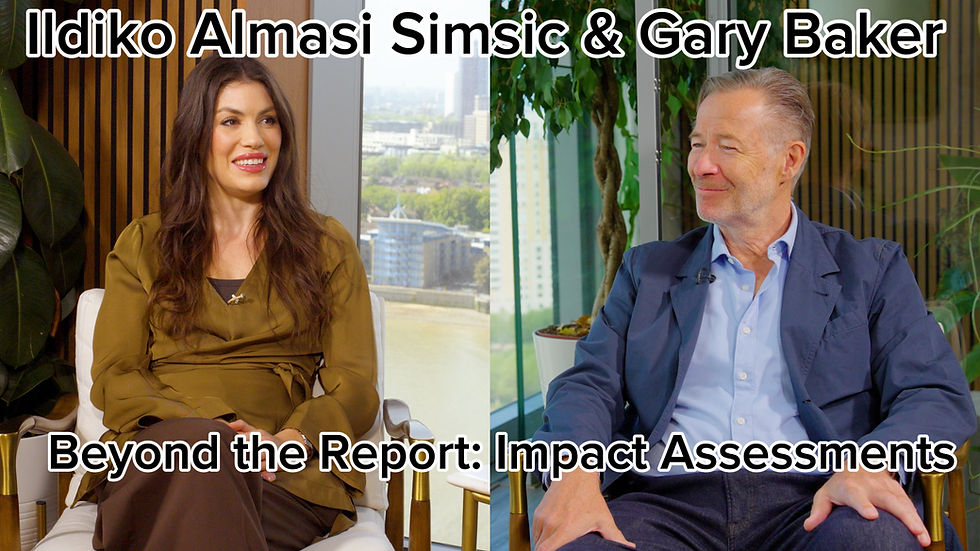
In this episode of the Non-Nonsense Sustainability Podcast, host Ildiko Almasi Simsic welcomes Nina Lesikhina from Bankwatch to discuss the complex dynamics between international financial institutions (IFIs) and watchdog organizations. They explore the challenges of accountability, personal safety for those raising concerns, and the potential for collaboration between these entities. The conversation delves into the intricacies of policy implementation and community engagement in development projects.
The episode covers a range of topics, including the definition of accountability, the mission of watchdog organizations, and the role of multilateral development banks. Nina shares insights into the challenges faced by communities affected by development projects and the importance of stakeholder engagement. The discussion also touches on the difficulties of balancing individual and collective rights in the context of development.
Key ideas from the conversation include the need for effective risk management, the importance of transparency and accountability, and the potential for collaboration between IFIs and watchdogs. The episode highlights the complexities of development work and the need for ongoing dialogue to improve outcomes for communities and the environment.
Highlights
Nina Lesikhina discusses her role in improving community outcomes through advocacy.
The challenges of accountability and personal safety in development projects are explored.
Nina explains the mission of watchdog organizations in holding banks accountable.
The episode examines the potential for collaboration between IFIs and watchdogs.
Nina shares real-world examples of community engagement and project oversight.
The discussion highlights the importance of transparency and effective risk management.
Ildiko and Nina explore the complexities of balancing individual and collective rights.
Key takeaways
1. Accountability in development projects requires responsibility for actions and commitments, including remedying harm.
2. Watchdog organizations aim to hold multilateral development banks accountable for their promises and commitments.
3. Effective collaboration between IFIs and watchdogs can improve project outcomes and community engagement.
4. Transparency and risk management are crucial for successful development projects and stakeholder trust.
5. Balancing individual and collective rights is a complex challenge in development work.
6. Ongoing dialogue between IFIs and watchdogs is essential for improving community and environmental outcomes.
Timestamped breakdown
0:04 — Introduction to the Podcast: Ildiko Almasi Simsic introduces the podcast and the episode's focus on accountability and policy implementation.
0:25 — Meet Nina Lesikhina: Nina Lesikhina from Bankwatch shares her background and mission to improve community outcomes.
4:00 — Defining Accountability: Nina and Ildiko discuss the meaning of accountability without using buzzwords.
6:26 — Mission of Watchdog Organizations: Nina explains the role of watchdogs in holding banks accountable for their commitments.
9:35 — Challenges in Development Projects: The discussion covers the complexities of balancing individual and collective rights.
13:08 — Selecting Projects for Oversight: Nina describes the criteria for choosing projects to monitor and engage with.
18:42 — Engagement with Banks: Nina outlines the process of engaging with banks to address project issues.
26:31 — Expertise Required for Watchdog Work: Nina talks about the diverse expertise needed to effectively monitor development projects.
34:09 — Responsible Exit from Projects: The conversation explores the concept of staying involved in challenging projects for positive impact.
42:22 — Retaliation and Safety Concerns: Nina shares examples of retaliation against communities and the challenges of addressing it.
50:33 — Improving IFI-Watchdog Relations: Nina suggests ways to enhance cooperation between IFIs and watchdog organizations.
Edited transcript
Welcome to the Non-Nonsense Sustainability Podcast. I'm IL Kamashi Sims and today we're tackling a couple of buzzwords around accountability, community responsive outcomes, and policy implementation. My guest today is Nina from Bankwatch whom I met for the first time today in person, but we have been in touch over the years thanks to our clients and joint projects. Nina, welcome to the show.
Nina: Thank you. I'm very happy to be here. Thank you for this invitation. To kick things off, can you share one part of your job that makes you the proudest?
Nina: As a civil society organization representative, our mission, and this is what I truly believe in, is to make the life of people better. I've been working in this sector for 20 years or something, using different focuses like environmental sustainable development and now a bit more on human rights and leveraging instruments, government, MGVs, corporations. But the purpose of this engagement or this advocacy was always around making communities, right holders' life on the ground better, more safe, more clean, more just, more engaging, more empowering. And at the current position of my work with Bankwatch, this is what I'm proud of, that when we manage to convince or negotiate with the multilateral development banks, in my case the EBRD, improvement of their investment projects or policies which potentially could impact even the broader implementation or the project sustainability and a positive impact, that's when I'm proud.
Nina: So when we do these fact-finding missions to different countries like Central Asia, Uzbekistan, Kazakhstan, Kyrgyzstan, the Caucasus, and when we firstly engage with those communities which are struggling for different reasons because those projects are not implemented properly, they're damaging their labor rights or land rights, and then we come to London or maybe meet with bankers at other venues and start negotiating, sometimes fighting, sometimes really trying to convince, sometimes using different instruments, but when we succeed even a little bit to improve the project design or project location or ensure there is meaningful stakeholder engagement, I know it's a buzzword, yes, nevertheless, now we try to move from stakeholder to right holders because we believe it covers better the essence of public participation in decision making. So when we manage to do that and people feel that they're more engaged in decision making, they feel that there is more attention, for example, to the way how the waste management is done. They got the compensation, for example, for the land that they lost. So it's not easy, successes are not that many, but when they happen, I'm very proud of myself and my team.
IL: No, thanks for that. And as I told you, one of the reasons I wanted to have you here is because when I started working for one of these development banks, I was convinced we're the good guys and then I met you and you thought you're the good guys and I just thought, okay, then who's right, who's wrong? How do we build these projects together? And how do we help each other if seemingly we both want the same things? So I guess we can start with the buzzword-worthy definition of accountability and how these institutions often talk about what you're talking about. We ensure community responsive outcomes through rigorous stakeholder inclusive frameworks aligned with internationally recognized best practice. I'm sure you've heard this before and you know that often these are just words and the implementation does not reflect this aspiration. So if you had 60 seconds to explain what accountability is without using a buzzword, what would you say?
Nina: I would say accountability is responsibility for your actions, promises, commitments, and inactions in some cases, which includes that in case you do a mistake or fail your promise, you must be responsible and capable and able and be open to explain why it's happened. To take actions to fix the problem, to take actions to remedy the harm, for example, if it's in place, and learn the lesson to make sure that this mistake or failed commitment or whatever failed promises happened won't be repeating in the future.
IL: Okay. To me, and as someone who's worked on all sides of this as part of the bank for developers as a consultant for a bigger consultancy, for me it means that when we say something will happen, it will happen and if it doesn't happen we explain why that is and try to make it happen in very simplistic terms. But then returning to my earlier point about who are the good guys, what is the mission of a watchdog organization that you work for?
Nina: But this is pretty much around keeping those MDBs, should we say development banks, multilateral development banks, public banks, you know, it's a struggle especially when you use not English. It's a difficult concept to explain to the communities actually.
IL: Exactly.
Nina: Even that's the challenge and I would say the banks do not care that much even about explaining how it all works to people, to right holders, to the communities about the system, the concept of the multilateral development banks. But nevertheless, that's our mission. That's our task as a watchdog to hold those banks accountable for their failed promises, failed commitments, and mistakes. The overall idea of the multilateral development banks, it's a development. Yes, it's a good thing. It's unfortunately a buzzword because it's insane sometimes how differently people understand development and there is definitely a gap between how western actors stakeholders see the development from how the local communities from the global south or developing countries see that.
IL: There is a difference between creating a project specifically to bring a benefit like a development benefit like that we traditionally understand as development or building a piece of infrastructure with a safeguarding and I browse myself with a mandate to not cause more harm.
Nina: Yes.
IL: And that's where, you know, there was a discussion a few years ago that it's an identity crisis for a lot of these development banks because they call themselves that, but if you look at their portfolio, it's maybe that, maybe not that.
Nina: Yeah. I guess it's like we're getting to this like a very extremely complicated world of human beings because it's also about when I see like because we do work with a specific investment, we oversee specific investment projects and our mission and objective to help the communities to benefit or get if there is a damage to get that harm remedied. But we do also work, and I'm in particular with the policy, with the safeguards, with the regulation of how those banks operate like environmental social integrity, etc., to kind of secure a bit more like a broader implications for a broader range of the projects. And when we work with the specific projects, you know, we always we quite often face this notion that there are like individuals' interests and rights like a community members or communities versus the collective rights.
IL: Yes.
Nina: Like a population. I guess like this renewable energy project these days is a very good example of that. And I've been working a lot before on environmental issues like climate change and this is what we were fighting a lot you know to have this like a clean energy share right that was like the way to do climate change and now it's like really spreading like broadly large scale a lot of investments big capacity like renewable energy projects but that it looks like it's good right it's going to be like green energy green energy, renewable energy. So, we going to we are succeeding.
IL: Yeah.
Nina: But then it kind of clash with the biodiversity objectives and people.
IL: Exactly.
Nina: And then when we say like guys, you build like solar energy project or huge wind power plant project next to the community and community is not benefiting from that at all. Like is zero like no employment, no proper compensation for the land because most likely in those countries there is no there are no like land rights like private property etc. And they're not benefiting even from this green energy. No, they're not getting that. But at the same time, if you look at the country level, the share of the renewable energy and you know, implementation of like a climate commitment of the of the country of the government is kind of getting better, right?
IL: No, I know. And that's like something that I actually like wrote about and and advocate for actively that there's such a disconnect between this macro-level sustainability and what actually happens because you and I both know what it means when they take land for a wind farm. You take a little piece.
Nina: Exactly.
IL: Sometimes it's less than whatever 10% of the land. They get compensated based on market value. And because what do you replace? like how do you calculate that and then they're stuck with this piece of infrastructure forever because there's no decommissioning and it used to be so I used to work on larger infrastructure before and like hydropower like you know you know and it was much more of a push for a developer to talk to the people because they were building this thing for 5 10 7 10 years and Renewables are built in a year, year and a half and then the operator comes in. So in terms of incentives, the developers are often putting up with it for a year or two because then it's not their long-term problem.
Nina: Exactly. And when it's in operation stage, like the labor demand is so low.
IL: Yeah.
Nina: So it's like zero. But then like returning back to how you find these projects. I mean obviously we know that some things are higher risk. We know that there are infamous return clients with the track record. How do you select these projects that you follow?
Nina: Yeah, we have like multiple factors which influence the decision and unfortunately apart from the risk of the project itself because we're also civil society organizations we have some capacity limitations, funding limitations and donors also have their own geographical priorities or the sector priorities which we should also consider if we want to have some funding for our work. That's one of the criteria. Another criteria is of course if there is like active community or civil society organizations are present in the region or around the project site that we could cooperate collaborate and support. But in some cases.
IL: That's like a little collaborate cooperate. Okay.
Nina: Yeah. How give us a real example. You have a project that meets these requirements. You actively engage with these NG like oh I buzz myself you email them and say look guys we're going to keep an eye on this what do you think or how how should we imagine in a life in a day in your life in the office.
Nina: Yes so yeah like two approaches so for example let's imagine Central Asia is clearly the priority for many donors as well as Western Balkans for example, because there are a lot of investments, still not strong local or country level environment, social regulation where probably more oversight is needed not only from the development banks but first of all from the civil society and civil society is also not that advanced. That's why some international CEOs could step in and kind of support through the capacity building or direct oversight of the projects. And but Central Asia is also very diverse inside right. So for example in Kyrgyzstan or Kazakhstan until recently when unfortunately we witnessed the uprise of the authoritarian regime all this foreign agent law introduction etc. But before that we've been working with some civil society organizations for a while. We keep a contact and for example when we spot new investment project in the region we just approach them and say guys do you know anything are there any concerns do you want to work together to check what's on site whether people are happy whether environmental protection is in place and etc. And if they say yeah sure for example we join we do a joint like a mission on the project site we talk to people around or they can do it separately and we can help with the engaging with the bank later on we talk to the people communities on the ground we just observe you know it depends on the project like you know whether there is some like I don't know safety security on the ground right if it's like renewable energy project we can see the you know even like observe the birds the wildlife so how how how it's managed how diverse and etc etc so we do all these checks talk to people and then we do like a joint report with the key findings whether we believe there are some it's going to be buzz words non-compliance with the banks like a policies and commitments and then all together we bring those findings to the banks banker's attention.
IL: Yeah, I know. I know that part.
Nina: Yes.
IL: But then in terms of findings that might not meet this requirement because often these could be more minor issues or could be issues that are present today but there is an active commitment to remedy it over time. How do you make that decision to actually email me? how bad it has to be for that email to go out.
Nina: I don't think we it's hard to say that like this is important and this is not important right if it's like a non-compliance if we can see that it contradicts to what the bank promised committed because I mean when we speak about those commitments and aspirations it's usually quite like a general but you know top level like you know women empowerment like climate.
IL: Not if it's in the ESAP. So if it's committed in the environmental social action plan, that's a condition of the financing under the loan.
Nina: Yes.
IL: And that's usually like a long-term thing. So when we when we discuss amongst colleagues like having an ESG rating is you take a photo and like that's a snapshot or you spend one day on site and like you see what you see. But having the performance management is like shooting a movie. It's not linear up. There's like better days, worse days and there's an overall gradual improvement over time.
Nina: Yes, definitely. So then like if there is an environment social action plan available publicly which is not the case for all the projects, right? As we know it's mainly for the high-risk projects which in case of some of the banks it's very small share in the portfolio. So if there is an ESAP in my social action plan and we can see okay what like gaps were identified and like mitigation measures proposed in the timeline and even if we can see the progress update which is also not always the case then of course we can kind of assess our findings from the ground against those commitments and implementation because if there one of the recommendations or requirements under this environmental action plan was to have for example monthly meetings with the community to update on the project or collect grievances. But we know from the communities that the last time when they had that meeting was when there were so-called formal public hearings or public consultations probably before the approval or as a part of the environmental social impact assessment this like formal process required by the government or something like that and that's it and then we can see that you know it's not there and then we of course approach for example the management and like ask like you know what's going on why why it's not happening.
IL: So first you go to the client.
Nina: No no no bank no we first you you go to we go yeah but that's also kind of the overall strategy we do use. So we've been working in this development finance meaning that we use the lever we we can't directly engage with the government like a like public clients or the private clients companies we don't want to do that because we believe more effective way to do it via the banks because this is our like theory of change let's say okay so this is how how it works more effective we believe than obviously going directly to the government or public client in those countries which are lacking democracy let's put it nicely I mean similarly with the with the private sectors especially if it's a big corporations usually for locals there is a high risk of retaliation and reprisal and this is what we also don't want to put people under the risk as well as the bank watchers so we believe that's the more effective way because the bank also we have a leverage over the bank because it's a it's a public bank it's you.
IL: They have to listen to you.
Nina: Exactly I mean they have to listen because it's part of this accountability to the European taxpayers or European citizens and we as a European civil society organizations we have a right to kind of ask and even demand about how they spend and let's say public money European taxpayers public money and deal with the with the impact but also for them it's and I actually truly believe that for them it's also the way to do the risk management of the projects because they can't you know go to every project site to do site visits like regularly like and they appreciate our feedback sometimes sometimes not that much but overall there is this kind of agreement that this is a good risk management tool.
IL: Yeah. I mean, look, this is a show about real talk and there were clients that were challenging to defend like as someone who's worked on the inside. We did our very best. We saw we're the good guys. We tried to travel on site, send consultants, and there were still issues. And just having your email forwarded to management really helped our agenda as well. So like you know not not all the time but sometimes this was a very very useful way to triangulate our findings and our observations and say look they went there and they found stuff that's like even worse than what we discovered.
Nina: Yeah. I mean I'm I'm really happy to hear that that first time.
IL: That's great. No, let's say I mean also speaking about you know good guys and bad guys. I was thinking you know yesterday before you after you send me the questions like yeah you know it's a bit hard when we speak about the banks as a legal entity.
IL: Yeah.
Nina: Yeah. Probably they're like you know holding that much power right? having that much money and obviously a lot of responsibility which comes with the power and money and sometimes I'm getting super angry at them at the bank as a as a entity which is a bit also I don't know silly right because this is legal entity there there yeah there are no like you know it's not the person right that they don't do the the proper job they could they could do more they you know they could commit sure. But then for example when I go like down to the environmental and social department or civil society colleagues from from the banks and quite often I see very very committed people who really want you know to make a change or ensure exactly as as you came with this thinking that you want to to improve this world right to to make a.
IL: I thought that's what I'm doing.
Nina: And I and like I still believe that with all the, you know, the reservations and challenges of the current world, I don't know. Okay, I'm not going to speak about the old MDBs, but some MDBs I still believe do like more like a good, you know, stuff rather than.
IL: Yeah.
Nina: Yeah, to that extent you know and yeah especially now these days when this multilateral kind of concept and idea is challenged by.
IL: I know it's challenged by everyone.
Nina: Yes. I really to some extent want to preserve really kind of you know I feel it's a it's a it's a good to keep talking you know.
IL: Yeah. So you want to keep us around and so my next question is how much insight do you have in the operations of these banks like internally because I've worked in quite a few of these and it's different everywhere. Some places you have more like environmental social colleagues approving like project categorization and reviewing the impacts. In some places the banking teams are very powerful. So even they're pushing back. They're pushing for the project to progress even if you're like ringing the alarm. And of course due to the nature of our work like you don't really see that but a lot of the people are fighting these internal politics.
Nina: Exactly.
IL: And also like what kind of expertise do you need to be able to effectively do your work? because it's not just the technical and you're covering, you know, you talked about environment, biodiversity, the birds, especially people, human rights, the financing instruments, the mandates of the like it's a it's a lot of things.
Nina: Yeah, it took some time for me to learn how those MDBs operate and what the structure, the accountability kind of architecture.
IL: Yeah.
Nina: Yeah. But I mean there is no better word there is no better word right architecture infrastructure yeah it it takes times but I can say like from from Bankwatch we have a quite diverse expertise I'm personally have environmental sciences and policy background some people have like a journalism or gender studies or it's more recent one or international development. So it's a kind of you know mix you also learning by doing pretty much and if as I always say if there is an interest and commitment and you kind of share the values with like what skill set organization doing you can learn quite quickly and speaking about this like internal dynamic at the banks and how much we're aware like as I said, we mainly work with the like on a daily basis. We closely work with the usually with the environment social experts and civil society experts at the bank, but also obviously we do engage with the board members to raise concerns about how management do or doesn't do the job they're supposed to do. Or when it comes to the policy, of course, we we do engage with the with the board to promote like improvements or strengthening some commitments or removing actually some some dangerous propositions for the for the revised safeguards or something like that.
IL: And how effective is that? because often you know the board I can't speak for all the all the MDBs but sometimes the initial steps of concept project concept approval and then you know like progressing with the project that happens the board just has like a high-level overview on that they know that it's whatever a wind farm somewhere in Central Asia or a solar somewhere in some country they don't yeah usually the client's name is there and if they're switched on and interested that should like ring a bell.
Nina: But how how effective is when when you come in because I imagine you only find out about projects at the disclosure or do you find out before?
Nina: Sometimes we find out before but usually when the initial project summary documents are published.
IL: Okay.
Nina: And I can't speak also about all the MDBs but the one I'm particularly working on they like for the like a big part of the project especially high-risk projects they always disclose pretty much in advance of the project approval by the board. So we have some time to do advocacy but it's not just buzz word. It seems to getting forbidden you're actually doing it but like from from my perspective like once we put the project on the website that we're going to support this we've done like a year or two of work and negotiation to put all of that together. So then you coming in with your complaints is like a little bit of a shock.
Nina: But it's also maybe important to understand that sometimes we get engage with the board before the approval.
IL: Yeah.
Nina: And this is when it's the best especially if we discover some significant violations even of human rights like environmental standards especially when it comes to the retaliation or the land grabbing not land acquisition and this kind of things. So or it's like you know if the client is the one that has a very negative track record or like you know this repetitive factor.
IL: Yeah.
Nina: And our idea especially if the local groups or the CSOs really are really against the project. So we really mobilize all the efforts to kind of inform and try to convince the board not to support that project. I know it's could be also for you kind of because you spend so much time already due diligence preparing all this information. I know but sometimes yeah it's necessary but I should also say it's not quite often we're successful with that sometimes we manage to convince some of the board members who finally could vote kind of against or abstain but yeah quite often still the the final decision is kind of to support the project.
IL: Okay. And then during the implementation of the project, so we do approach the management first trying to resolve those issues and if we can see that there is either reluctance or really they're getting very defendant or resist to engage meaningfully, we go to the board kind of trying to explain that it's not how it should work.
IL: Yeah. And then I would love to get your view on on this concept of responsible exit or staying on transactions that are not going well but we believe they're going better because we're on it. And I was working on one of those and we had this discussion like are we just exiting the deal? Are we not going to prepare it for board approval? And the internal consensus was that they're not doing well for whatever reason. But at least we're on a call with them multiple times every week as a team of lenders. Like not just like one person scolding them, but it's like all of our combined opinion of what should be done. And if we remove that, yes, we're like safeguarding the bank's reputation. and there's none of this conversation, but that doesn't eliminate the problem.
Nina: So sometimes there is a very conscious decision to stay involved on very challenging deals because you know that even if the change is a little bit even if there's just a little tiny improvement, they're still better than what they would do without us.
Nina: Yeah, this is like a very typical um yeah the typical pitch or how you call it we keep hearing from from the from the management it's better to have us than do not have but we genuinely think exactly of these absolutely yes I can feel that it's really true and honest perception of of how you could improve the project yes but first of all, there are some projects which local communities, local civil society are against from the beginning and they keep saying about that usually it's around the the mining projects, you know, and then speaking about what development means, right? So, so then it's up to you to decide whether having mind developed with your presence probably in a bit more sustainable way but against the will of the local communities. Is it development or it's not?
IL: It's a really good question. A very complicated one. So that's one example. And another example in some cases I agree it's better to have you and in like let's say in many cases we see how the presence or involvement of multilateral development banks help to secure the improvement or you know kind of at least having this leverage over the client right but we had just recently such a case but then you know okay let's try good like let's mobilize as all our efforts like different MDB CSOs from our side we're quite often even to engage in this like multi-stakeholder dialogue like banks ours and the client we are very solutions focused so we also we are not like completely you know radical saying never ever right we want to improve it for the sake of people and for the benefit of people and and environment we always come with a very specific recommendation so we're ready to sit at the table and discuss but then you know one year, two year, three year, four, five and there is no progress. We keep talking we keep I know like at least some envirocial experts from the from the bank side are really trying hard to make it happen from our side completely the same.
IL: So you see.
Nina: But client.
IL: Yes. Yes. No. No. As I said, I mean, no, no, no, seriously, as I said, like, you know, when we speak about the bank as a legal entity, I don't feel much, you know, sympathy. But when you go to the envirocial or sustainability department or team, I can see very committed people, very committed, very well educated, sharing the values of, you know, community development, people benefits, sustainable development in a good, you know, a good way, not in a not in a buzz way.
Nina: Absolutely. And I can see how they're trying hard, but I also accept that they have their own limitations within the institution, within the government, within this this like multilateral development institution architecture per se. Yeah, I mean I understand those limitations. But what I am trying to say that it's good to have you the banks multilateral development banks in the projects but at some point you should say enough because it's not working because at some point you're just legitimizing the very bad client very bad project.
IL: But then they repay.
Nina: Another way to get out of the deal.
IL: Exactly. But um as I just recently discussed also with the colleague of ours, we have such actually exactly like you explained the project in Uzbekistan. So we've been engaging with the with the bank with the client like for 5 years starting from the pre-approval stage like really alarming about those and the management team really did a good job about the ESAP in social action plan. It was really strong with it integrated many recommendations from the civil society very committed team and we really you know try to push the the company in the right direction. But then you know the retaliation against local communities, human rights defenders and the workers increased tremendously and you know so there was the situation when like civil society organizations and the bankers were sitting at the table in London nicely discussing how to improve the project but people on the ground were suffering from this like intense retaliation imposed by the client and by the local authorities and it you know the more we engaged with the bank and the client obviously there was more pressure and the more it kind of trickled down to the local communities and at some point my colleague said but you know this engagement doesn't make any difference for people they keep suffering and then company exactly I mean it's it's not clear how they resolve it with the bankers but company after 3 years just prepaid the loan.
IL: Yeah and then I think it's important that you often bring facts from the ground that don't reach us otherwise.
Nina: Exactly.
IL: Because our main source of information is the client.
Nina: Exactly.
IL: And while they may admit to some shortcomings, they don't admit to the big shortcomings.
Nina: Yeah.
IL: But when it comes to the issues, some are more factual.
Nina: Yeah.
IL: Like somebody got fired with seemingly no good reason. somebody got injured because the OS or the health had the safety was not there like this is more you know obvious that there is there is the issue but we have both been in situations where it's more of a he said she said like is that retaliation could you prove it and then it comes back to and I'm now I'm speaking as the social specialist in one of these He says, "What's within our scope to look at?" I ask myself many times when we we encounter these issues, am I an investigator here? Is it my job to try to figure out what happened? What is the good way to to move forward?
Nina: Yeah. I mean this like retaliation issue is and how to anticipate or and how to respond and assess the risk is kind of getting pretty high to the agenda of of the MDBs because of the overall shrinking civic space or the banks moving to new risk environment, new regions, countries etc. So it's it's it's getting there and this issue with the she say he said like evidence and everything it's like widely discussed. But it's interesting that like when it comes to the corruption or any other prohibited practices, the bank is fine with investigation.
IL: Yeah. But that's a different function. That's not under the policy and not under ENF.
Nina: It's under the different policy.
IL: Yeah.
Nina: Right.
IL: Yeah.
Nina: Which is also the part of this like safeguard safeguarding system. Right. So they're I mean so they're I mean and and you know so if they kind of prove the corruption or any other prohibited practices the result is the client is a sanction list. Pretty strong straightforward good signal right super effective instrument to prevent the this kind of prohibited practices in the future. All right. But when it comes to retaliation like the the bank stuff gets like you know hesitant like whether I should investigate what kind of evidence like whether like but I don't see the difference.
IL: But can can you bring some like real examples for those who are not familiar with what retaliation is like what what is it in real life.
Nina: In real life it's when like right holders or affected communities or for the workers who speak up, criticizing the project, the company, trying to defend their rights which were violated in in most cases or experiencing or facing the negative impacts of the of the projects. They hit this pressure from either the client, the company or some quite often those companies work together with the local authority or the government. How those pressure looks like? It could be caused from the police station threatening suggesting to stop speaking up to stop being that vocal. It could be threats from the from the company saying that if you're gonna keep you know speaking up you will lose your job. It could be threats from the security service to the public monitors or human rights defenders suggesting that if you're going to supply information about the projects the problems at the project to the international civil society organizations or any other actors we're going to file a criminal case against you.
IL: Okay.
Nina: Or which we also see speaking also about the evidence and yeah speaking about the evidence. So I mean how you imagine what kind of evidence in this situation right like people recording audio or video of those talks and everything. Yeah it it would be good to have that then it may be even legal to do that in some countries.
IL: Exactly.
Nina: But just imagine if you're in the position of that person who gets this call from the police station. Are you really in the kind of you know mood immediately to to switch on your you know phone to record that I think you're immediately get very stressed panicking and etc. And if it's like especially consistent of course people not going to do recording or like asking the security service agent sorry can I record you because I I need to prove you know to go to the of course not no one is going to do but for example first of all when it's like a repetitive practice and in many cases we can say it's not just one isolated incident it's happening with many so many people affected people report that and I Yes, that's a pretty much enough for the for the bankers to conclude that this is like a systematic retaliation or reprisal.
IL: Have you ever had a project where this was successfully addressed?
Nina: We had a couple of projects where just sorry just a bit one step back. Another very good example of what is retaliation is it's so-called slap. I admit, but I'm going to explain. It's a strategic litigation against public participation. This is what like big corporations and like private companies are widely using to silence civil society organizations like or or communities or individuals. So they file a suitcase against those people or organizations usually on the ground of or allegation of defamation or something like that and then obviously those individuals or organizations are dragged into this litigation process which consumes all energy, capacity, resources, money and etc. And this is this very strategic way to kind of keep or make them you know keep silent and not being vocal. And this is you can evident and prove pretty well, right? But in these cases, I should admit, especially when there is a slap, strategic litigation against public participation, the banks respond quite quickly.
IL: Yeah.
Nina: And they manage to in many cases, but not obviously in the most to negotiate with the with the company to drop the lawsuit.
IL: Yeah.
Nina: When it comes to those cases when people get the calls or threats or something like that, in some cases we managed to kind of protect and stop that retaliation from against those persons but it's not often unfortunately it's not often. It's also very much depends on the client the leverage over the client you know if it's a big corporation I mean they really don't need that money that much you know they can easily prepare and like say by right this is what they do or they also claim that you should prove that it's not us it's like you know local authority or it's a government you know.
IL: Yeah have you ever been threatened or personally felt unsafe working on projects.
Nina: I started with Bankwatch as a the community support coordinator and my focus was on Uzbekistan and like Central Asia a bit broader and we like did a lot of traveling to the country to talk to the and you know how the situation is Uzbekistan really like it's it's not easy place to go and but I was like quite enthusiastic you know really open trying to find different like limited number of civil society organization that we could trust and work or engage with the communities, talk to people etc. We did like proper security risk assessment before traveling there just to make sure that you know we have some like precautionary measures in place and we're also well prepared in case there is some incident that the organization could respond. So we did some preparations in that sense. So we assume especially in the beginning there was a kind of surveillance over the arts. I mean I assume for as in case of many international actors or civil state organizations coming there but directly nothing like that. But a couple of years after those like often visits to Uzbekistan, I heard from our partners that some like a security like country level security service asked about me like who am who is that person? What she's doing there? But also once we went to meet with the with the local groups were just sitting in the in the restaurant just really chatting. It was like you know informal dinner and then the partners from from the country spotted like two people sitting at the table table next to us and recording and but they said like don't worry it's fine. It's kind of usual thing because some of the high-profile human rights defenders came to that meeting.
IL: Oh okay.
Nina: Yeah. So they kind of expected that. But for us it was like it's like in the movies.
IL: Yeah.
Nina: Exactly. Yes. Exactly. It was very like a beautiful restaurant with a very good like Uzbek cuisine. So it wasn't Yeah. But that's the the reality. I'm not that worried about like myself because still I'm representing international organization. I have a bit more like also capacity on the on the organization side to to engage to respond to protect etc. But what I'm worried is those people.
IL: Yeah. Yeah. living leaving living there.
IL: So going forward if you had to close this discussion with a few points that could really improve the relationship with the banks so that you because it seems like you're working for the same goals. So it seems like there should be I don't know what's the right word to say it but like less hostility more cooperation from like as in both sides. What would you say are the like three key things that should be changed to achieve that?
Nina: Again, I'm not going to speak about like all the MDBs because they're quite different, you know, in the approaches and and everything, but what I definitely would recommend to change it's quite programmatic, but I have a feeling that it could work because like you know quite often the safeguards the standards are there but then implementation is kind of the biggest problem and then when we look like what's the reason for the weak implementation or all those gaps quite often or like sometimes that's the the matter of the capacity again from the bank side. I was just recently checking the the data on the stuff from the banking site and environmental and social kind of sites department and.
IL: It doesn't add up.
Nina: Absolutely how you can expect those like 50 60 people really manage you know the due diligence and secure the compliance of like hundreds.
IL: Yeah every year.
Nina: Projects in the portfolio.
IL: Four or 500 projects every year plus monitoring and you know the monitoring requirements are different for each MP some monitor forever.
Nina: And we were discussing recently I I mean I like I always said that like in particular bank like many people just you know left because of the mental breakdown like you know the they emotionally burned out because of the workload and we can see that so as I said the commitment is there but they're just you know drained they can't like I mean that's definitely excuse for them as a individuals but that's not the excuse as a as a institution and this is what we keep saying especially if you're expanding to new regions increasing portfolio reporting all these like record investments but there is no correlation or adjustments in the in the in the budget spending for the due diligence for the for the compliance for the monitoring and etc. So then like then it's then you're just faking you know or or or your commitments because commitments and aspirations are good but they should be backed up with the action plans, resources and monitoring. Right.
IL: Yeah.
Nina: And if it's even one factor is not there then it's just blah blah blah. I'm sorry.
IL: Yeah. No, it ties it back nicely to what I said. If you say you're going to do it, you have to do it. And if you're not doing it, then maybe your values don't align with how you're managing your operation.
Nina: With budgets.
IL: Yeah. Exactly.
Nina: Exactly.
IL: So if you say that sustainability, human rights, the environment, the birds are important to you, that should be supported by hiring the right number of people to make sure that all the transactions are carried out accordingly.
Nina: Yeah. The same with the accountability mechanisms those banks have. Right? Again, if you look at the budgets of those mechanisms and the budget of the banking team.
IL: Yeah, that's uh that's another that's another episode.
IL: Well, thank you for coming today. I really enjoyed having this discussion with you finally because I was very curious to how you're selecting the project, how you're evaluating and what's your strategy to make things better. Thank you.
Nina: Thank you very much. It was very interesting conversation and with this like a buzzwords it made me also you know be conscious about like explaining and maybe also understanding for myself better how you know all these big buzzwords are really what they mean really for for for people and for our work. Thank you so much. It was a pleasure.
IL: Thank you. That was it today. Like, comment, share, subscribe and we'll be back for some more buzzwords next time. Hey, hey, hey.


Comments